


Table of Contents
How is the search engine landscape evolving?
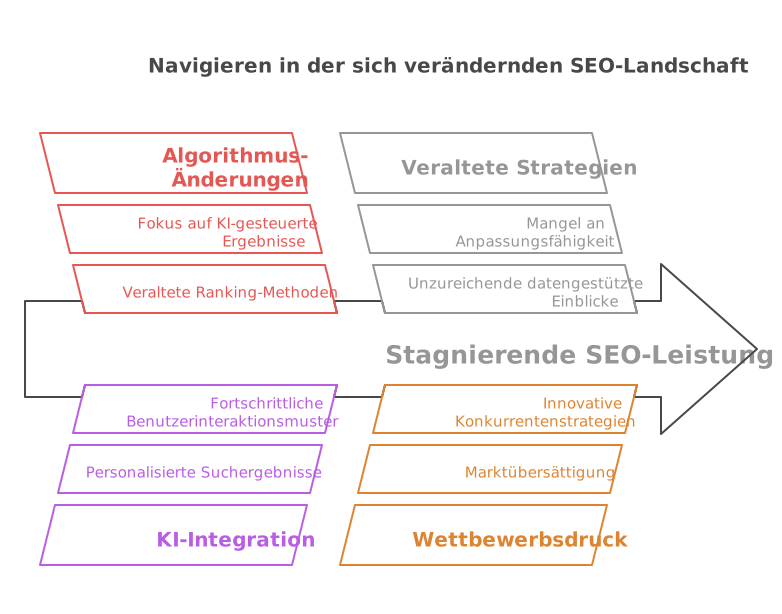
The search engine landscape is evolving rapidly. What works today may well be obsolete tomorrow. You may find that your tried-and-tested SEO strategies are no longer delivering the same results as they did a year ago. Rankings are stagnating, traffic is declining and conversion rates are falling despite continuous optimisation.
Many websites and online shops are currently facing this challenge. Google has fundamentally changed its algorithms, and artificial intelligence is influencing search results more profoundly than ever before. Traditional ranking factors are losing their significance, whilst new criteria are coming to the fore.
In this comprehensive guide, you’ll gain a detailed overview of the most important developments in search engine optimisation and AI. You’ll discover which specific measures really deliver results and how to future-proof your SEO strategy.
From our experience with many clients, we know that those who understand and implement these trends early on secure a decisive competitive edge. This article explores the most relevant SEO and AI trends and highlights practical ways in which you can optimise your digital presence.
Key points at a glance
- E-E-A-T is crucial: content must come from authors who are demonstrably experienced and trustworthy.
- User experience is a ranking factor: your site’s technical performance (Core Web Vitals) and user-friendliness directly influence your ranking.
- Quality > quantity when it comes to backlinks: a single relevant backlink from an authoritative site is worth more than hundreds of weak links.
- AI is your tool, not your replacement: use AI for research and analysis, but refine your content with human expertise and experience.
How important is ‘Mobile First’ for successful SEO?
The dominance of mobile devices is no longer a vision of the future, but already a reality. Current data shows that more than 50 per cent (source) of all internet search queries come from mobile devices.
Google has responded to this trend by introducing its Mobile-First Index in 2019. Websites that aren’t optimised for mobile are now barely noticed.
Optimising Core Web Vitals and loading speed
Nowadays, a responsive website is no longer enough. Users browsing on mobile devices expect fast loading times, easy-to-understand navigation and content that is optimally adapted to their device. Google attaches the highest importance to your website’s mobile performance.
What factors are crucial when optimising for mobile devices?
- Touch-friendly navigation: Buttons must be large enough and spaced sufficiently apart to prevent accidental taps.
- Compressed images: Use modern image formats such as WebP or AVIF, which offer significantly smaller file sizes whilst maintaining the same quality.
- Simple forms: Keep the number of form fields to a minimum and use the correct input types for mobile keyboards.
- Local optimisation: Mobile search queries are often location-based – incorporate location-specific information into your content.
Nowadays, a responsive website is no longer enough. Users browsing on mobile devices expect fast loading times, easy-to-understand navigation and optimally adapted content. Google considers your website’s mobile performance to be of the utmost importance.
How can you regularly test your website using the Google Lighthouse tool?
This tool can provide you with specific guidance on areas for optimisation. Pay particular attention to the Core Web Vitals (more on this in Chapter 6), as these are direct ranking factors for Google.
One aspect that is often overlooked is the mobile design of content. Whilst long texts work well on desktop devices, mobile users require a different information architecture – such as shorter paragraphs, concise subheadings and meaningful visual elements.
The golden rule is: design content so that it can be grasped quickly, even with a short attention span.
What is the significance of search intent?
The days when SEO mainly consisted of keyword stuffing are long gone. With every update, Google gets better at understanding the intent behind a search query. These days, search intent is at the heart of every successful SEO strategy.
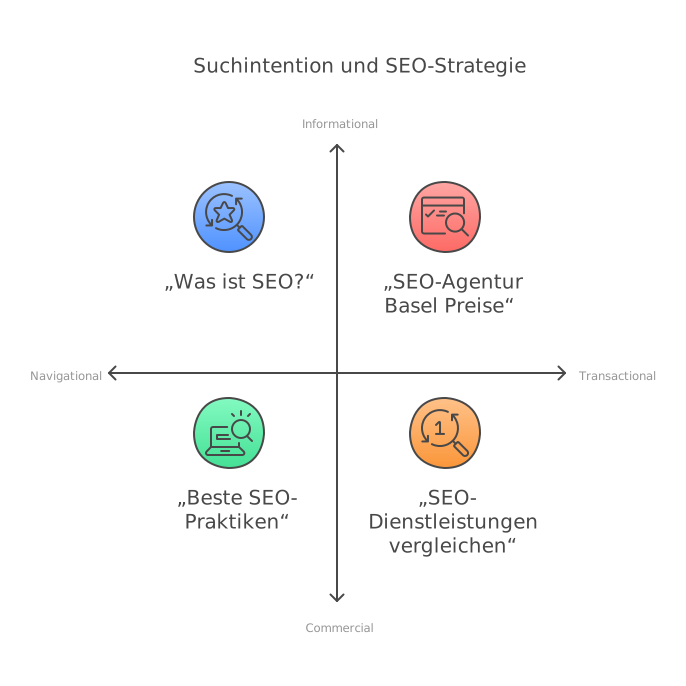
What are the four basic search intents that search engines can distinguish?
- Informational intent: The user is looking for information on a specific topic.
- Navigational intent: The user wants to find a specific website or page.
- Commercial intent: The user is researching before making a purchase and comparing products or services.
- Transactional intent: The user wants to carry out a specific action, often a purchase.
For your SEO strategy, this means you need to understand which stage of the customer journey your potential customer is at, and tailor your content accordingly.
Here’s an example: whilst a search query such as ‘What is SEO?’ is clearly information-oriented, ‘SEO agency Basel prices’ demonstrates a transactional intent.
Google uses sophisticated AI algorithms such as BERT and MUM to understand contextual relationships. These algorithms analyse not just individual keywords, but the semantic context of the entire search query. Your content must therefore be thematically comprehensive and answer relevant questions from your target audience.
One effective approach is the cluster method: create comprehensive pillar content on a main topic and link it to more specific articles that explore sub-topics in greater depth. This thematic cluster structure signals to Google your expertise and relevance to specific subject areas.
Use tools such as the ‘People also ask’ section in the search results to understand what questions your target audience has on this topic. Answer these questions comprehensively in your content and you’ll be rewarded with better rankings.
Why is SERP snippet optimisation more than just meta descriptions?
Optimising your display in search results (SERP snippets) is set to become even more important. The click-through rate (CTR) on your search result has become a key ranking factor.
A well-optimised snippet can make the difference between being invisible and securing top positions.
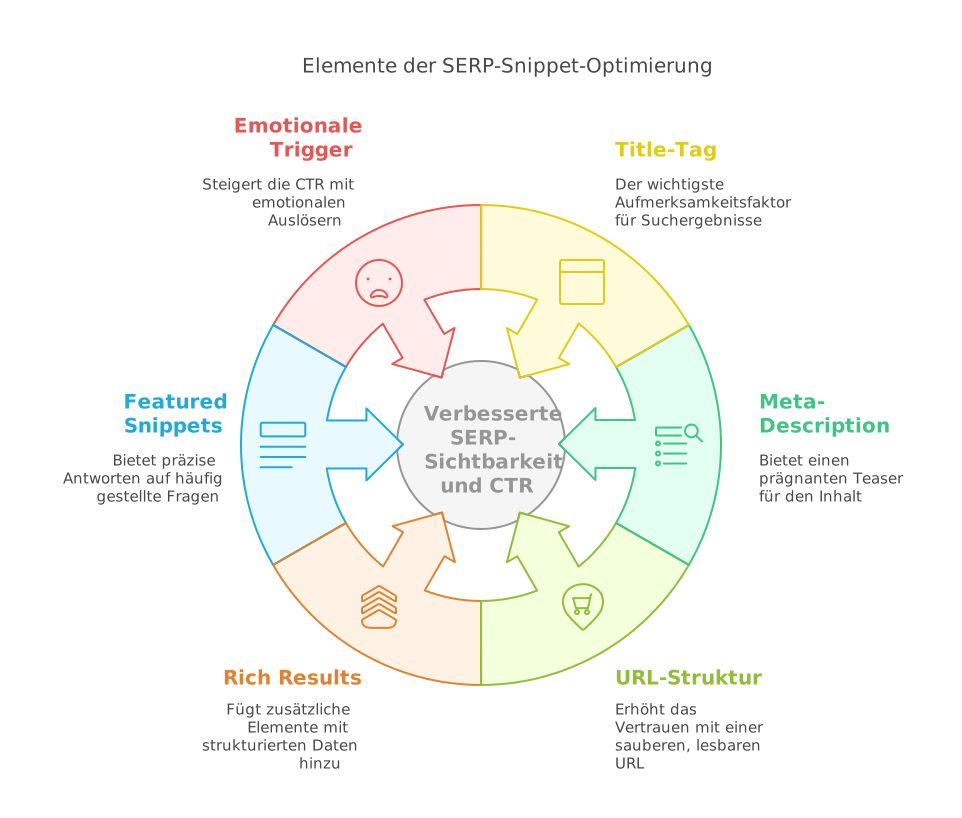
A SERP snippet consists of several elements that you can influence:
- Title tag: The most important factor for grabbing attention – place your main keyword as far to the front as possible, and keep the title under 60 characters or 580 pixels (desktop) or 920 pixels for the mobile view. Another important aspect: use action-oriented language.
- Meta description: Although Google often rewrites the meta description, it remains an important element. Craft a concise teaser of 120 to 155 characters that promises a clear benefit. Or 990 pixels for the desktop version and 1,300 pixels for the mobile view.
- URL structure: A clean, readable URL structure boosts trust and encourages clicks.
- Rich Results: Additional elements such as rating stars, FAQ snippets or product information are made possible by structured data.
The SERP landscape has expanded significantly. Alongside the classic blue links, there are featured snippets, knowledge panels, video carousels and much more. There are specific optimisation techniques for each of these SERP features.
For featured snippets, for example, you should provide precise answers to frequently asked questions, ideally in list form or as a definition at the start of the text.
One particularly effective tip is to add an emotional touch to your title tags and meta descriptions. Research shows that snippets containing emotional triggers such as ‘ultimate’, ‘tried and tested’ or ‘insightful’ achieve significantly higher click-through rates. However, it’s important to strike a balance with credibility. After all, excessive clickbait can lead to high bounce rates.
Why structured data and how Schema.org boosts visibility!
Structured data is the key to rich search results and significantly improves a website’s presentation in the SERPs. Implementing Schema.org markup is no longer optional, but a fundamental part of any SEO strategy.
Schema.org is a joint initiative by Google, Bing, Yahoo and Yandex, which has created a standardised vocabulary for the semantic marking-up of web content.
This markup enables search engines to obtain precise information about a page’s content, ranging from product details and reviews to FAQs.
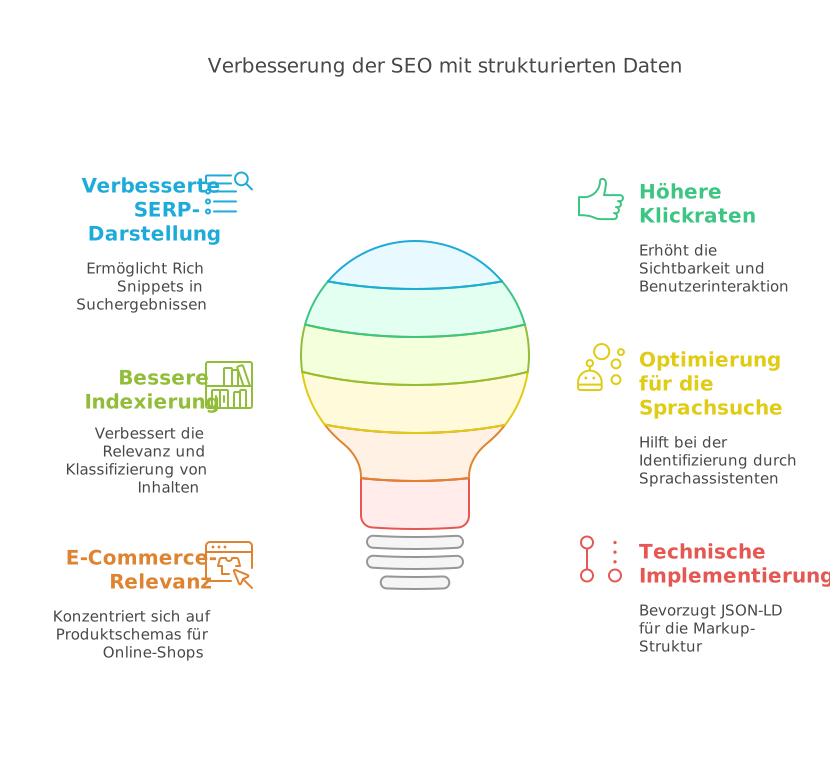
The benefits of structured data are manifold:
- Improved SERP display: Your content can be displayed as rich snippets, which include star ratings, price information, availability or other relevant details.
- Higher click-through rates: Rich results stand out clearly from regular search results and have been shown to generate more clicks.
- Better indexing: Search engines understand the context of the content better and can classify it more accurately.
- Voice search optimisation: Structured data helps voice assistants identify your content for voice queries.
For e-commerce websites, the ‘Product’, ‘Offer’ and ‘Aggregate Rating’ schema types are particularly relevant. Content publishers should focus on the ‘Article’, ‘News Article’ and ‘FAQ’ schemas. Local businesses benefit from the ‘Local Business’ schema in combination with opening hours and location details.
Technical implementation is best carried out using JSON-LD, the format recommended by Google. The code is placed directly in the website’s header section without affecting the visible content. For WordPress users, there are numerous plugins such as Yoast SEO or Schema Pro that make implementation considerably easier.
Not all structured data automatically leads to rich results. Test your implementation using Google’s Rich Results Test and the Schema Markup Validator. These tools will show you whether your markup is correct and which rich results can be generated.
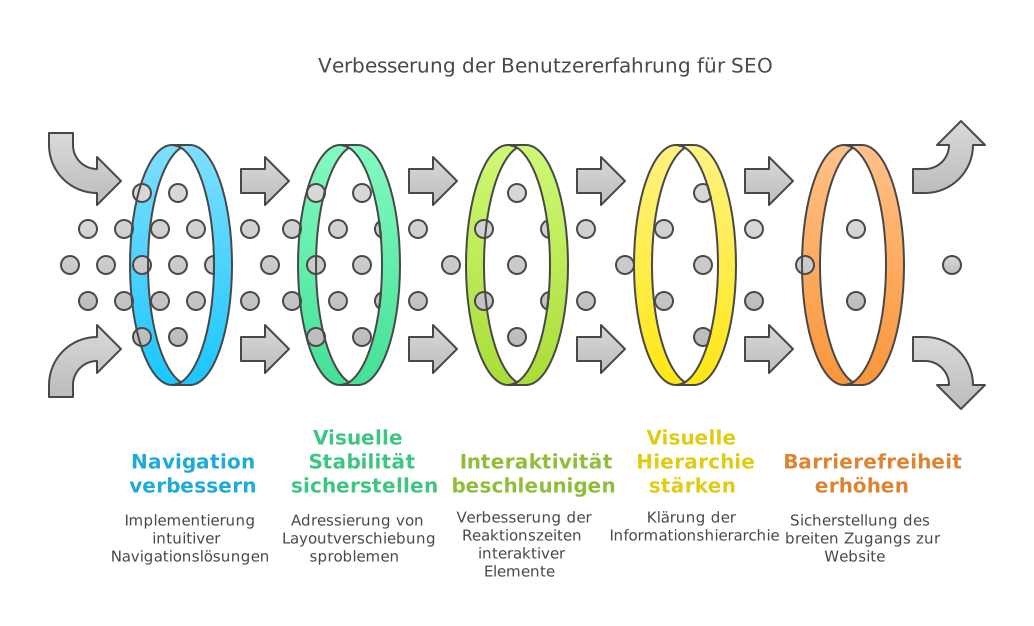
Why is user experience a key success factor?
User experience (UX) has evolved from a secondary factor to one of the most important ranking signals. Google regards user experience as a direct indicator of a website’s quality. This development was initiated with the Page Experience Update and has continued to gain momentum ever since.
An excellent UX is characterised by the following features:
- Intuitive navigation: Users can find what they’re looking for straight away, without having to think too hard.
- Visual stability: Elements do not shift during the loading process (Cumulative Layout Shift).
- Fast responsiveness: All interactive elements respond immediately to user input.
- Clear visual hierarchy: Important information is immediately recognisable, whilst secondary content is subordinate.
- Accessibility: The website is accessible to all users without restriction.
The UX signals that Google measures directly include time on page, bounce rate, click depth and interaction rates. This data is interpreted using machine learning, which evaluates, in a context-dependent manner, what constitutes a ‘good’ UX for different types of websites.
The content experience is particularly relevant. Long blocks of text without structure lead to high bounce rates. Proceed as follows:
- Short paragraphs of no more than 3–4 lines
- Meaningful subheadings every 200–300 words
- Bulleted and numbered lists for quick comprehension
- Infographics and diagrams for complex information
- Interactive elements such as quizzes or configurators
One aspect that is often overlooked is mobile UX. Test your website on different devices under real-world conditions. What works perfectly on a desktop can be frustrating on mobile devices, particularly when filling in forms and using drop-down menus.
UX optimisation requires continuous analysis and improvement. Tools such as Hotjar or Microsoft Clarity offer heatmaps and session recordings, which you can use to analyse actual user behaviour on your website.
If you want to carry out in-depth analysis, you can do so using Google Analytics 4. Use these insights to pinpoint problem areas and make targeted improvements.
Why are page load speed and the relevance of Core Web Vitals important?
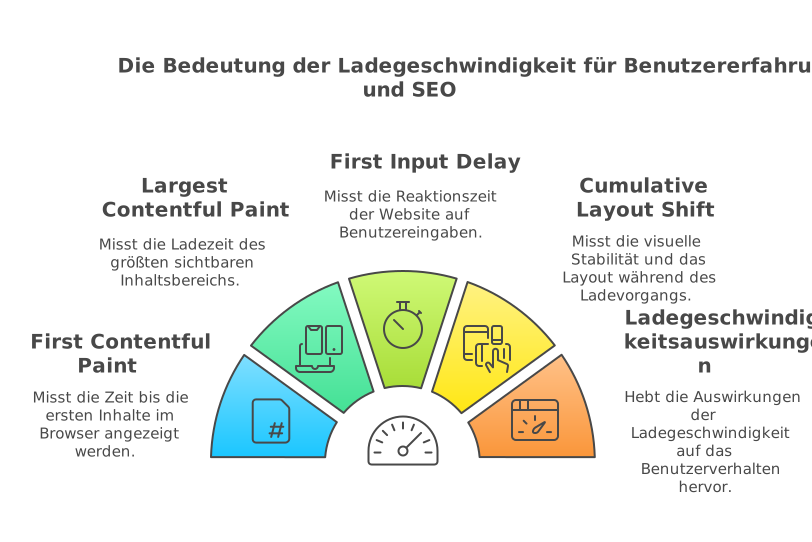
Since their introduction, the Core Web Vitals have established themselves as a key ranking factor. Google’s measurement criteria are being refined ever further, and for good reason: users’ expectations of fast websites are constantly rising. A slow website now has virtually no chance of ranking highly.
The Core Web Vitals consist of three key metrics:
- First Contentful Paint (FCP): This metric measures the time it takes for the first content – such as text, images or graphics – to appear in the browser. This allows the user to see that the page is actively loading within the first second of being accessed.
- Largest Contentful Paint (LCP): This metric measures how long it takes for the largest content element – for example, an image within the visible area – to load. Values below 2.5 seconds are ideal.
- First Input Delay (FID): The FID metric measures the time between, for example, the user’s first click on a button and the website’s response. The target value should be under 100 milliseconds.
- Cumulative Layout Shift (CLS): CLS is a metric that measures the visual stability of the page whilst it is loading. If advertising banners suddenly appear whilst the page is loading, part of the text is displaced. A good CLS value is below 0.1.
Loading speed has a direct impact on user behaviour:
research shows that if there is a delay of more than three seconds, over 50 per cent of mobile users leave the page. Every additional second of loading time reduces the conversion rate by an average of 7 per cent.
There are various technical measures for optimising Core Web Vitals:
- Image optimisation: Use modern formats such as WebP or AVIF, implement lazy loading and always define width/height attributes.
- JavaScript optimisation: Reduce the amount of JavaScript, use code splitting and prioritise the loading of critical JavaScript.
- CSS optimisation: Extract critical CSS and load it inline; omit non-critical CSS.
- Server optimisation: Implement HTTP/2 or HTTP/3, use effective caching and a CDN service.
- Resource prioritisation: Use resource hints such as `preload`, `prefetch` and `preconnect` for critical assets.
Modern website architectures such as headless CMS or Jamstack offer significant performance benefits through static rendering and API-based data integration. These approaches could become the standard for high-performance websites in the future.
Monitor your Core Web Vitals regularly using tools such as Google PageSpeed Insights, Lighthouse, Pingdom or WebPageTest.org. Field measurements based on real user data are particularly valuable, as they reflect actual performance under various conditions.
What is internal linking for better navigation?
Internal linking is a powerful SEO tool. As websites become increasingly complex, a well-thought-out internal linking structure becomes a crucial factor for success, both for users and for search engines.
Strategically planned internal linking offers several advantages:
- Improved crawlability: Search engine crawlers find and index content more efficiently.
- Thematic relevance: Links between related content strengthen thematic authority.
- Distribution of link equity: Ranking potential is transferred from strong to weaker pages.
- Longer dwell time: Users discover more relevant content and stay on the website for longer.
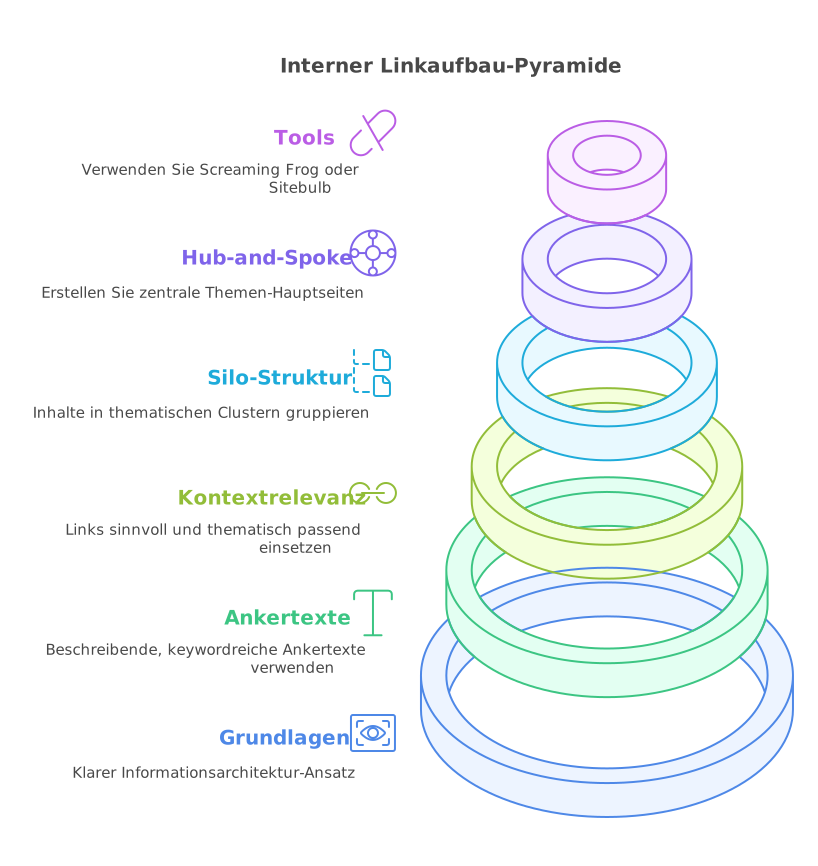
The basis for effective internal link building is a clear information architecture. Develop a logical hierarchical structure that leads from the general to the specific.
Users should be able to reach any page with a maximum of three clicks; this is known as the ‘3-click principle’.
The following rules should be observed when creating internal links:
- Anchor text: Use descriptive, keyword-rich anchor text – unlike with external links, there is no risk of an over-optimisation penalty here.
- Contextual relevance: Use links sensibly, and only where they are thematically appropriate and offer the user added value.
- Silo structure: Group content into thematic clusters that are heavily interlinked.
- Breadcrumb navigation: Use breadcrumbs that clarify the hierarchical position for both users and search engines.
An effective approach to internal link building is the hub-and-spoke method: create comprehensive main pages (hubs) on central topics and link from there to more specific subpages (spokes). This creates thematic clusters that Google interprets as signals of expertise.
Tools such as Screaming Frog or Sitebulb can help you analyse your current internal link structure and identify opportunities for optimisation. Pay particular attention to ‘orphaned’ pages with no incoming links and pages with too many outgoing links, which dilute link juice too much.
Backlinks – Why does quality matter more than quantity?
Backlinks remain a very important ranking factor, although the way they are assessed has changed fundamentally. The sheer number of backlinks hardly plays a role anymore.
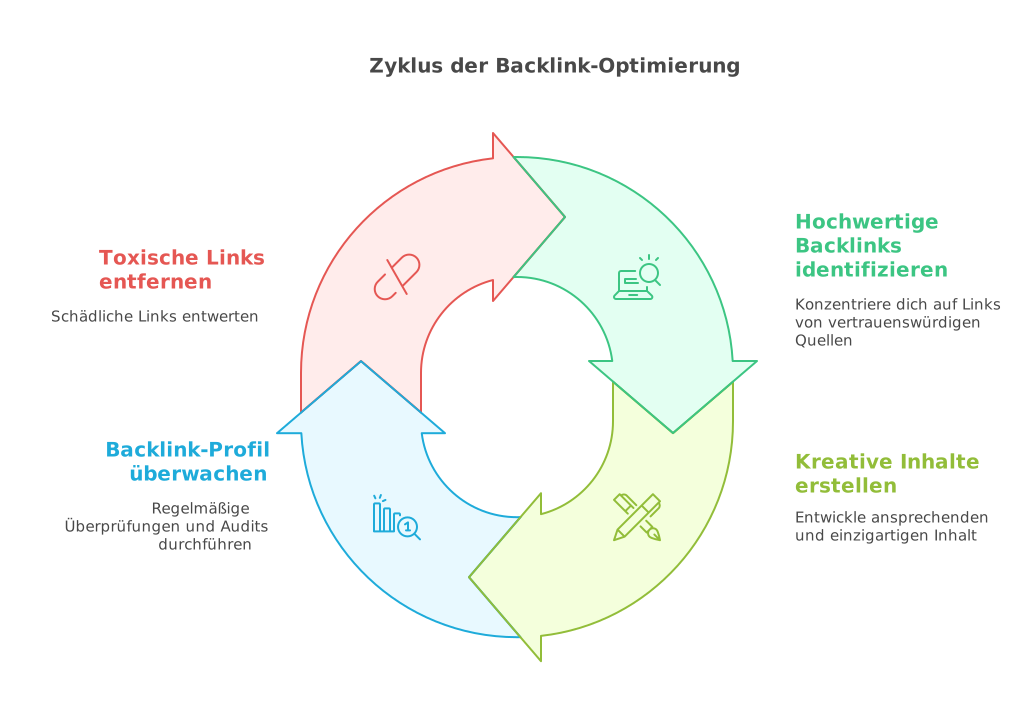
Far more important are their quality, relevance and naturalness. Google’s algorithms are now so sophisticated that they can accurately detect and penalise manipulative link structures.
Artificial intelligence is better able to detect link manipulation. That’s why it’s best to steer clear of risky link-building strategies.
A high-quality backlink profile has the following characteristics:
- Thematic relevance: links from websites within your own industry or on related topics.
- Authority of the link source: links from established, trustworthy websites with a high domain ranking.
- Natural growth: an organically built link profile without sudden spikes.
- Diversity of link sources: links from different websites, IP addresses and server locations.
- Diversity of anchor text: A natural mix of brand names, URLs, generic terms and exact keywords.
The most valuable backlinks come from so-called ‘seed sites’. These are websites that Google classifies as particularly trustworthy, such as leading news portals, universities or government institutions.
A single link from such a source can be worth more than hundreds of links from an average website.
Creative content strategies are more promising than traditional outreach methods for link building.
- Original research: Conduct your own studies, surveys or data analyses and cite them as sources.
- Expert interviews: Secure interviews with well-known experts who will share their involvement on your social media channels.
- Interactive tools: Develop useful configurators or visualisation tools that generate links as a reference.
- Skyscraper Technique 2.0: Identify successful content in your niche, create a significantly better version and contact everyone who links to the original.
One aspect that is often overlooked is the continuous monitoring and maintenance of your backlink profile. Toxic links can still appear despite all precautions and negatively impact your ranking.
Use tools such as Ahrefs or Semrush for your regular backlink audits and, if necessary, use the Disavow Tool to devalue harmful links.
Why build brand authority in the digital environment?
Brand authority has become one of the strongest indirect ranking factors. Google increasingly favours established, trustworthy brands in its search results.
Brand building is no longer just a marketing task, but an integral part of successful search engine optimisation.
Strong brand authority is achieved through the following strategies:
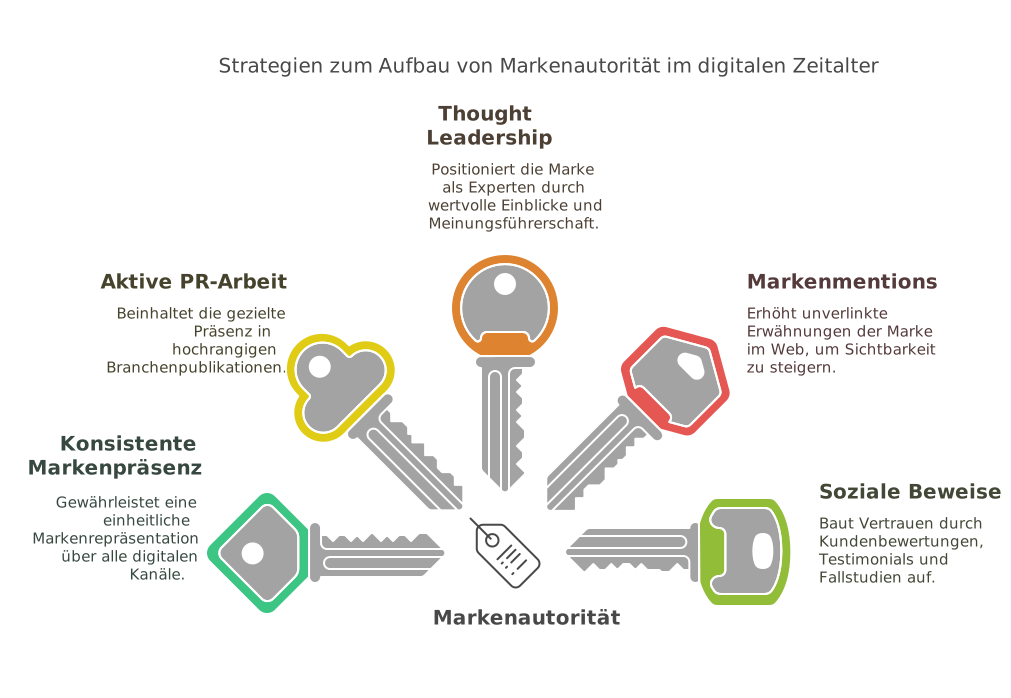
- Consistent brand presence: A uniform representation of the brand across all digital channels.
- Active PR work: Targeted presence in high-profile publications within your industry.
- Thought leadership: Positioning yourself as an expert through valuable specialist articles and thought leadership.
- Brand Mentions: Increasing the number of unlinked mentions of your brand on the web.
- Social proof: Customer reviews, testimonials and case studies to build trust.
Google evaluates brand signals in various ways. Branded searches – search queries containing your brand name – are a strong signal of brand relevance. A higher search volume for your brand correlates directly with better rankings, even for non-branded keywords.
The co-citation theory states that websites frequently mentioned in the same context as established authorities in your industry gain authority themselves. You should therefore aim to be mentioned alongside well-known brands in your industry in relevant publications.
Social media plays a vital role in building brand authority. Whilst social signals are not considered a direct ranking factor, a strong social media presence leads to more brand mentions, backlinks and direct traffic – all factors that indirectly influence your ranking.
One underestimated factor is brand consistency: ensure that all content across your online presence – from your website and social media to guest posts – reflects a consistent brand identity. This increases brand recognition and trust among both users and search engines.
How important is E-E-A-T – with less theory and more practice?
E-E-A-T (Experience, Expertise, Authoritativeness, Trustworthiness) has evolved from a theoretical concept into a practical evaluation system. It will soon no longer be enough simply to be aware of these principles; they must be actively implemented in every SEO strategy. This is a particularly important approach for YMYL (Your Money or Your Life) sites that wish to succeed.
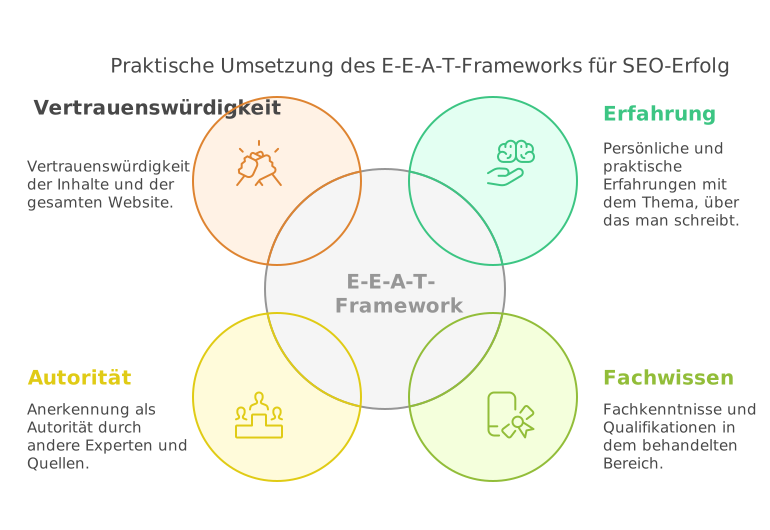
The four components of E-E-A-T are:
- Experience: Personal experience with the topic being written about.
- Expertise: Professional competence and qualifications in the field in question.
- Authority: Recognition as an authority by other experts and sources.
- Trustworthiness: The trustworthiness of the content and the website as a whole.
To implement E-E-A-T in practice, the following steps should be taken:
- Author profile pages: Create detailed author biographies setting out relevant qualifications, experience and publications.
- Transparent sources: Cite and link to trustworthy external sources that support your claims.
- Last updated: Keep the content up to date and clearly display the date it was last updated.
- Contact details: Provide full contact information, a legal notice and a privacy policy.
- Fact-checking: Carry out rigorous fact-checking on all content.
The experience component – which Google recently added as an additional ‘E’ to E-A-T – is particularly important here. It is no longer enough to present theoretical knowledge – personal experiences and practical expertise are rated more highly.
Example: An article on mountaineering written by someone who has actually climbed Mount Everest will be ranked higher than a purely theoretical text.
Google uses various signals to assess E-E-A-T:
- Quality and relevance of inbound links
- Mentions in authoritative sources
- User interaction with the content
- Participation in specialist discussions
- Consistency of information compared to other authoritative sources
Particularly strict E-E-A-T standards apply to YMYL pages (health, finance, law, etc.). In these areas, demonstrable expertise must be ensured through formal qualifications and professional experience, and external experts should be consulted where necessary to validate the content.
Would you like to know how we can implement this for your business? Take a look at our offering for Swiss SMEs.
GAN – When to use this architecture and application in search engine optimisation?
Generative Adversarial Networks (GANs) have fundamentally transformed the field of artificial intelligence and have become a key tool for sophisticated search engine optimisation strategies.
The architecture of this AI comprises two competing neural networks – the generator and the discriminator – which, through their competition, continuously achieve improved results.
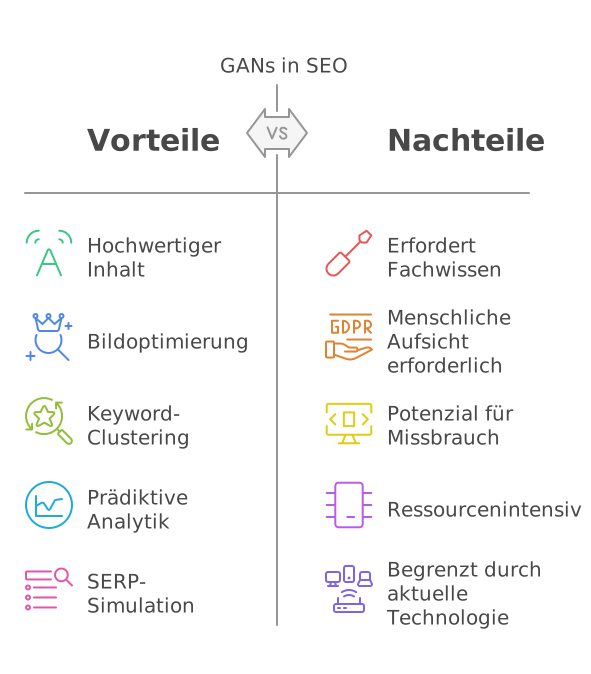
In the context of SEO, GANs offer various innovative applications:
- Content generation: Generating high-quality text content that is virtually indistinguishable from human-written text, though it is always reviewed by humans.
- Image optimisation: Automatic enhancement of product images and visual content to improve the user experience.
- Keyword clustering: Intelligent grouping of keywords based on semantic similarity and user intent.
- Predictive analytics: Predicting trending topics and emerging keywords within the niche.
- SERP analysis: Simulation of different search results pages for various user profiles and locations.
Particularly in the field of content creation, the use of GANs must be viewed in a nuanced way. This technology primarily serves as a support for human content creators, not as a complete replacement.
The best results are achieved through a hybrid approach: AI for research, structuring and initial drafts, combined with human expertise for tone, nuance and E-E-A-T factors.
A practical example is automated image recognition and optimisation using GANs. These can adapt product images for different platforms, generate alternative text and even identify which visual elements achieve higher conversion rates.
This not only saves time but also improves performance in the area of visual search.
In the field of technical SEO, GANs can be used to identify patterns in server logs and crawl data. They detect anomalies and opportunities for optimisation that would escape human analysts, and can make predictions about the impact of specific technical changes.
Implementing GAN-based tools requires specific expertise. However, cloud-based services such as Google Cloud AI or OpenAI are increasingly offering user-friendly interfaces that are accessible even to SEO teams without in-depth AI expertise.
Multisearch: Why is it the future of search queries?
Multisearch represents the next development in search technology. This feature, introduced by Google, enables users to combine text and image searches to obtain more precise and context-relevant results. Multisearch is now an integral part of modern search behaviour.
The basic idea behind Multisearch is simple yet effective:
Users can upload an image and add a text description. For example, a photo of an item of clothing with the search query ‘in blue’ or a picture of a piece of furniture with the question ‘Will this fit in my living room?’
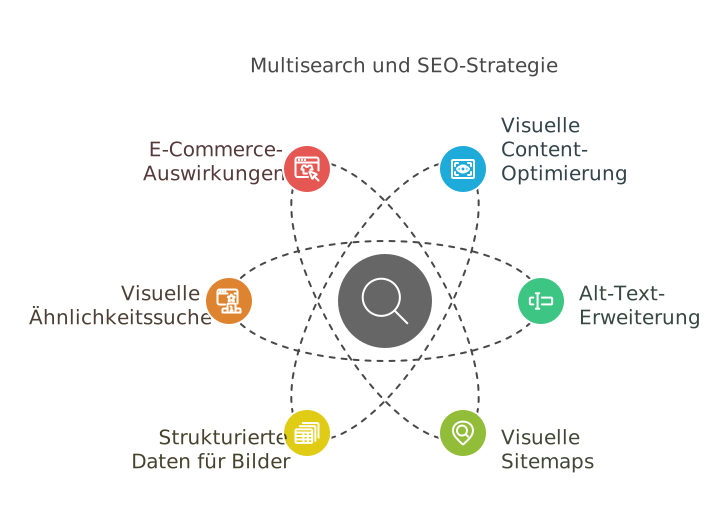
Multisearch has far-reaching implications for SEO strategy:
- Visual content optimisation: Product images must be available from different angles, with clear details and in various settings.
- Alt text enhancement: Alt text should go beyond a simple description and include contextual information such as colour, material, style or intended use.
- Visual sitemaps: Implement sitemaps for images that contain additional metadata.
- Structured data for images: Use the ImageObject schema and other visual mark-ups to improve discoverability.
- Visual similarity search: Enables users to search for visually similar products on the website.
Google’s ‘Lens’ technology, which powers Multisearch, uses advanced machine learning and natural language processing to recognise objects in images and link them to text queries. To be optimised for this, images should be of high quality and contain clearly recognisable main objects.
Multisearch is a game-changer, particularly for e-commerce websites. With the ‘near me’ feature, users can take photos of products and search for local availability. Local shops should therefore ensure that their product catalogue, complete with images, is available online and linked to their Google Business Profile.
Multisearch represents a wider trend: search is becoming increasingly multimodal and intuitive. Users are no longer limited to text-based search queries, but can interact more naturally. This requires a holistic approach to content creation that takes into account different senses and forms of communication.
Why is artificial intelligence part of everyday search engine optimisation?
Artificial intelligence has fundamentally transformed day-to-day SEO. These days, AI is no longer just a buzzword, but an indispensable tool at every stage of search engine optimisation. Through the strategic use of AI tools, you can gain a decisive advantage over the competition.
The practical applications of AI in SEO are diverse:
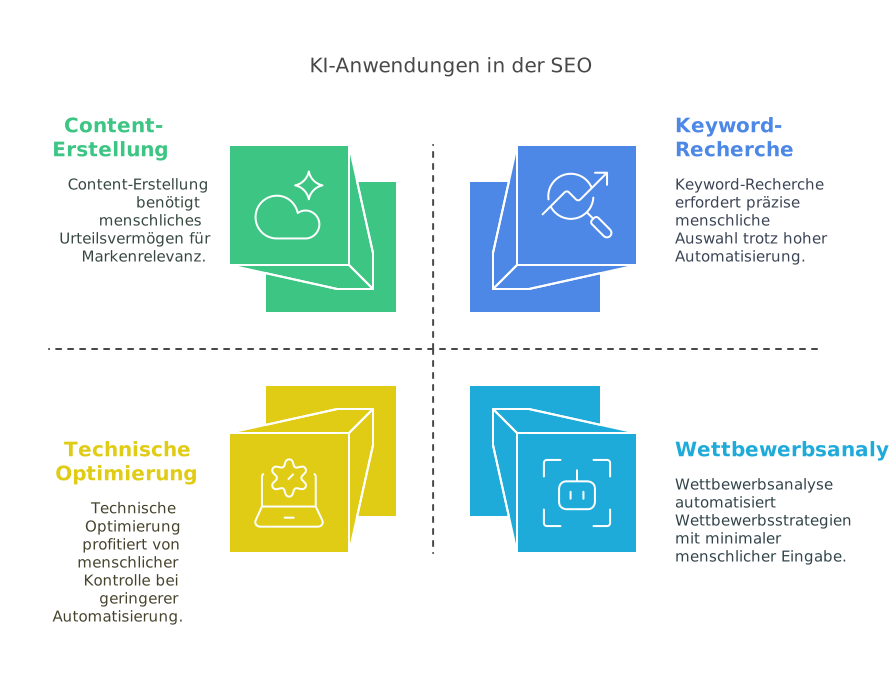
- Content creation: AI tools such as GPT-4 or Claude assist with brainstorming, structuring and even drafting initial versions.
- Keyword research: AI algorithms identify relevant keywords, group them semantically and analyse competitive potential.
- Competitor analysis: Automated analysis of competitors’ strategies, content gaps and ranking factors.
- Technical optimisation: Identification of technical issues, prioritisation of fixes and prediction of their impact.
- Performance forecasts: Predicting traffic trends, conversion rates and ROI for various search engine optimisation measures.
The effective use of AI in search engine optimisation requires a balance between automation and human oversight. For example, AI can analyse hundreds of keyword variations within seconds, but the strategic decision as to which of these are most relevant to the brand and target audience requires human judgement.
A hybrid approach is particularly effective when it comes to content creation. AI tools such as Jasper, QuillBot or Originality.ai can handle the research, create structures and deliver initial drafts. However, refining the text with personal experiences, brand tone and E-E-A-T factors remains a human task.
For technical SEO, AI-based crawling tools such as DeepCrawl or Botify provide insights that would not be possible with conventional methods. They recognise patterns in large datasets, identify anomalies and prioritise issues according to their potential impact on rankings and conversions.
AI is also playing an increasingly significant role in personalised user analysis. Modern analytics platforms use machine learning to identify user segments and predict their behaviour. These insights enable bespoke content strategies for different target audiences and stages of the customer journey.
What are zero-click search queries and what role does AI play in search?
Zero-click search queries – search queries that are answered directly in the SERPs without the need to click through to a website – are set to become the norm in future. Studies show that over 50 per cent (as of 2019) of all search queries now end without a click on an organic result. This trend, reinforced by AI-powered answers from search engines, presents new challenges for SEO.
The key drivers of this trend are:
- Featured snippets: Highlighted answer boxes that provide direct information.
- Knowledge Panels: Comprehensive information blocks on entities such as people, organisations or places.
- Google Business Profiles: Local business information with direct call-to-action options.
- AI summaries: AI-generated summaries of multiple sources provided as a direct answer.
- Direct answers: Immediate answers to factual queries such as weather data or currency conversions.
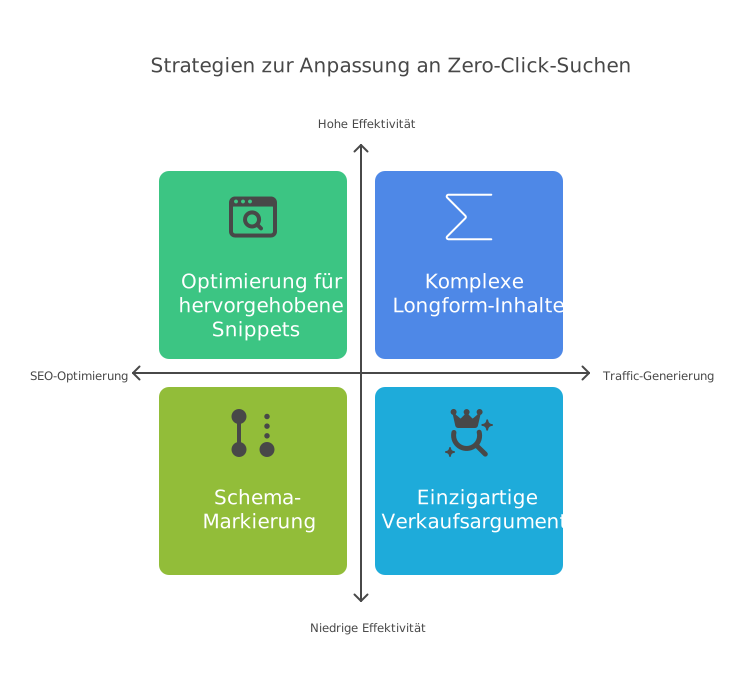
This development requires an adjustment to your SEO strategy. Instead of optimising solely for traffic, you must also consider your presence in these zero-click formats. The focus is shifting from ‘traffic at any cost’ to ‘visibility and brand awareness’.
To benefit from zero-click searches, you should employ the following tactics:
- Featured snippet optimisation: Answer key questions concisely and in a structured manner, ideally in list or table form.
- Entity optimisation: Ensure that your brand, products or people are established as distinct entities in the Google Knowledge Graph.
- Local presence: Keep your Google Business Profile up to date with current information, photos and customer reviews.
- Schema Markup: Implement structured data compatible with rich results, such as FAQs, How-To guides or event schemas.
At the same time, you should develop strategies for generating traffic despite zero clicks:
- Complex long-form content: In-depth content that cannot be fully displayed in snippets.
- Unique selling points: Give users a clear reason why they should click through to your website beyond the snippet.
- Call-to-action in snippets: Craft your featured snippet content to pique curiosity and encourage users to read on.
- Exclusive tools: Offer interactive tools or calculators that cannot be used directly within the SERPs.
The AI revolution in search, led by systems such as Google Gemini and Perplexity, is reinforcing this trend. These systems generate comprehensive, synthesised answers from multiple sources.
To remain visible here, it is crucial to be cited as a source – which in turn requires the highest quality of content and expertise.
Why is accessibility an essential SEO criterion?
Accessibility has evolved from an optional component into a critical SEO factor. With the Accessibility Enhancement Act, which comes into full force in June 2025, companies are also legally obliged to make their digital offerings accessible.
This legal requirement aligns with Google’s aim to prioritise websites that are accessible to all users.
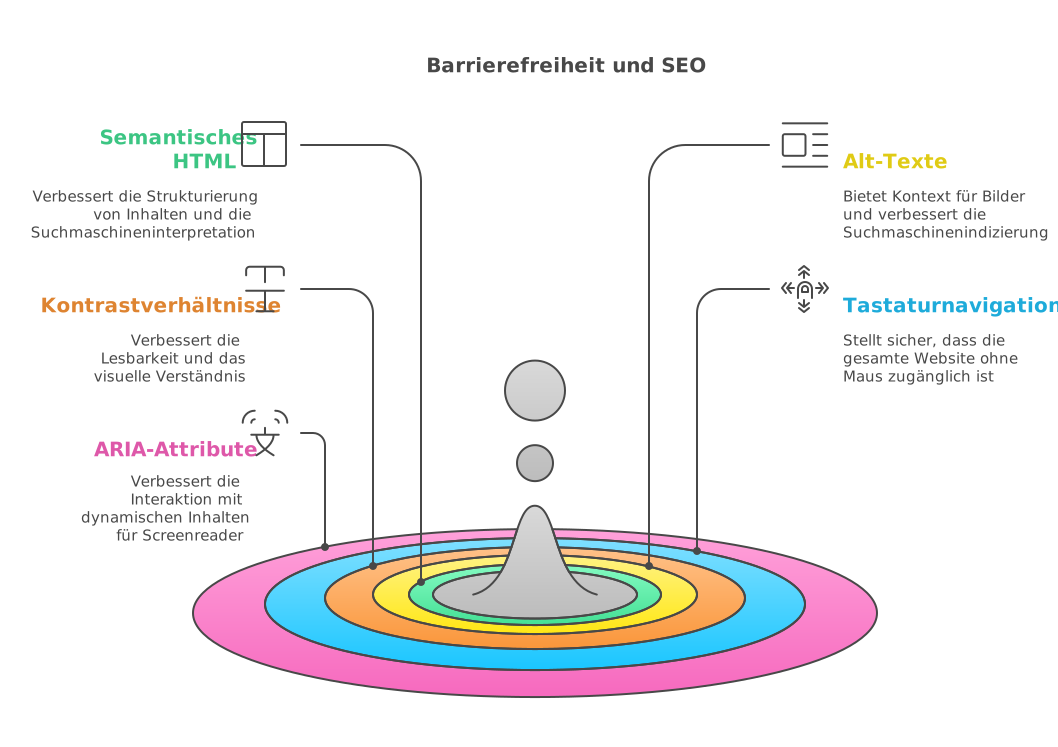
The SEO-relevant aspects of accessibility include:
- Semantic HTML: Correct use of heading hierarchies (H1 to H6) and structural elements.
- Alt text for images: descriptive, context-relevant alternatives for visual content
- Contrast ratios: Sufficient contrast between text and background to improve readability.
- Keyboard navigation: Full usability of the website without a mouse.
- ARIA attributes: Additional information for screen readers to improve the accessibility of dynamic content.
The overlap between accessibility and SEO is striking: many measures that improve accessibility also optimise discoverability by search engines. For example, alt text not only helps visually impaired users, but also provides search engines with context regarding image content.
To improve your website’s accessibility, you should take the following specific measures:
- Automated testing: Use tools such as WAVE, axe or Lighthouse to carry out an initial check for the most common accessibility issues.
- Manual testing: Navigate through your website using only the keyboard and check that all functions are accessible.
- Screen reader test: Try out a screen reader such as NVDA or VoiceOver to understand the experience of visually impaired people.
- Colour contrast analysis: Ensure that all text-background combinations comply with WCAG guidelines (at least 4.5:1 for normal text).
- Structured content: Use a logical document structure with a clear hierarchy of headings and sections.
As well as the technical aspects, the content itself should also be accessible. Use clear, understandable language without unnecessary complexity. Provide summaries or simplified versions of complex content. Make subtitles and transcripts available for videos.
Making your website accessible not only improves accessibility for people with disabilities, but also optimises the user experience for all users – and thus, ultimately, your search engine ranking.
Why is digital PR an essential tool in link building?
Digital PR has established itself as one of the most effective strategies for high-quality link building. In future, the boundaries between traditional PR and SEO will become increasingly blurred, as both disciplines share the common goal of strengthening a brand’s visibility and authority.
The essence of digital PR lies in producing valuable, newsworthy content that journalists, bloggers and influencers will voluntarily pick up and link to. Unlike conventional link-building tactics, digital PR is based on delivering genuine added value to publications and their readers.
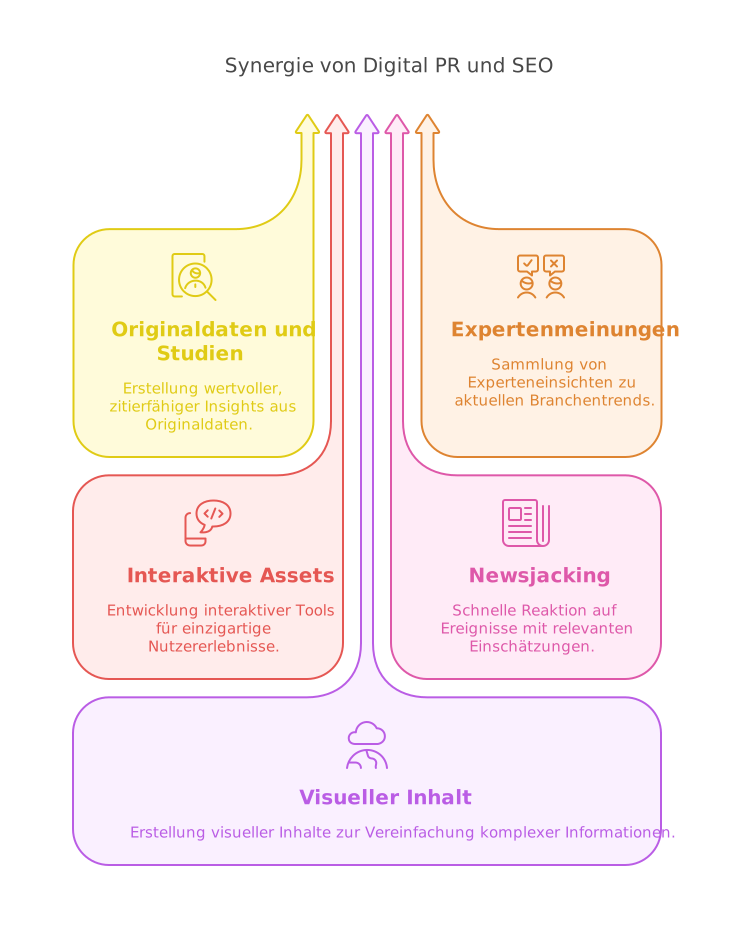
A variety of content formats form the basis of successful digital PR campaigns:
- Original data and studies: Collect your own data or analyse existing data in new ways to generate meaningful, quotable insights.
- Expert interviews: Gather insights from leading experts on current trending topics in your industry.
- Interactive assets: Develop interactive tools, calculators or visualisations that offer unique insights.
- Newsjacking: Respond quickly to current events with relevant expert analysis.
- Visual content: Create infographics, charts or videos to make complex information accessible.
A concrete example: A fintech company analysed publicly available data on property prices and salaries and created an interactive map showing how long people in different cities need to save to buy a property. This resource was linked to by numerous finance and news websites and generated over 100 high-quality backlinks.
The outreach process in digital PR differs significantly from traditional link building. Instead of mass generic enquiries, the focus is on:
- Personalised pitches: Tailor-made proposals explaining why your content is relevant to the specific publication and its readership.
- Media relations: Building long-term relationships with journalists and editors in your niche.
- Exclusivity: Time-limited exclusivity for particularly relevant publications.
- Multimedia press releases: Providing all materials in various formats to facilitate pick-up.
Integrating digital PR into your SEO strategy requires close collaboration between content creation, PR and SEO.
The best results are achieved when these teams work together from the outset – from brainstorming and content creation right through to distribution.
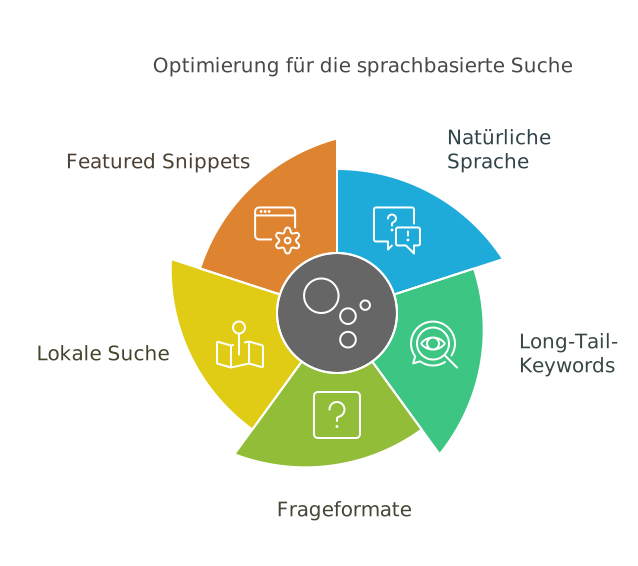
Why are long-tail keywords important for voice search?
Voice search has become an integral part of search behaviour. In the near future, more than 50 per cent of all search queries will be made via voice assistants such as Siri, Alexa or Google Assistant.
This development has reshaped the keyword landscape and brought long-tail keywords back into focus.
Voice search differs significantly from text-based search:
- Natural phrasing: Voice-based search queries are more conversational and contain full sentences or questions.
- Longer search queries: Whilst text-based search queries often consist of 2–3 words, voice searches comprise an average of 7–9 words.
- Question form: Voice searches frequently begin with W questions (who, what, how, why, where, when).
- Local relevance: A higher proportion of voice searches contain local references such as ‘near me’ or place names.
To optimise for voice search, your keyword strategy should be adapted accordingly:
- Question-based keywords: Identify the most common questions about your topics and answer them precisely and comprehensively.
- Colloquial phrases: Incorporate natural language patterns and colloquial phrases into your content.
- Featured snippet optimisation: Structure your answers so that they are suitable for featured snippets, which are prioritised for voice search results.
- Long-tail focus: Focus on specific long-tail keywords with lower competition but a higher likelihood of conversion.
A practical approach to identifying relevant keywords for voice search is the ‘People Also Ask’ box in the search results. These questions often reflect natural search behaviour and can serve as a basis for content structure.
Long-tail keywords have several advantages over generic head keywords:
- Less competition: Fewer websites are competing for these more specific terms.
- Better conversion rates: Users with specific search queries are further down the conversion funnel.
- More natural integration: Long-tail keywords can be integrated more organically into text without compromising the reading experience.
An effective approach is the cluster method: create comprehensive content around a main keyword (pillar content) and then link this to more specific articles targeting long-tail variants. This structure caters to both broader and more specific search queries and increases the website’s thematic relevance.
What role do voice assistants play in natural language search?
Voice assistants such as Alexa, Siri and Google Assistant have changed the way people search for information. Optimisation for these devices is no longer optional, but a central component of any SEO strategy. The particular challenge here is that voice assistants usually provide just one answer, rather than ten as with traditional search results pages.
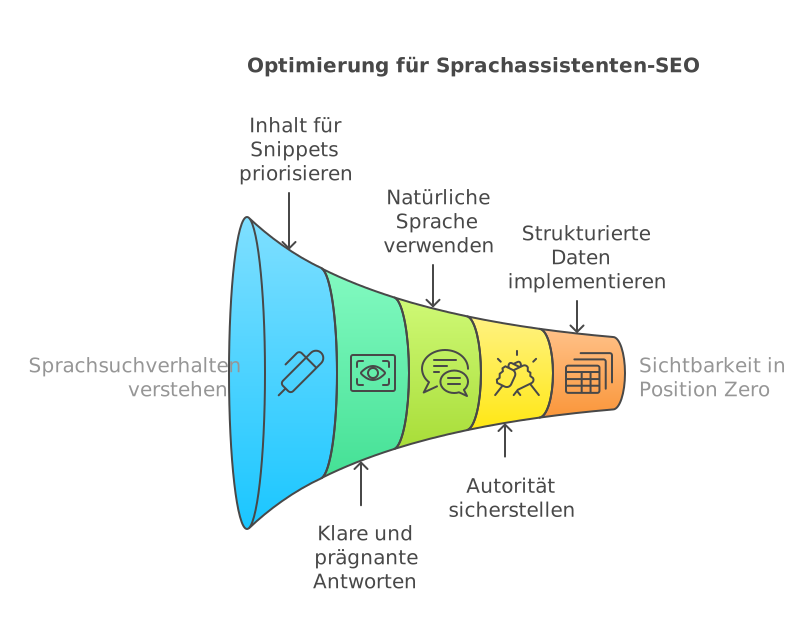
Anyone who wants to be found in this ‘Position Zero’ must understand how voice assistants select answers:
- Featured snippets: Voice assistants favour content that is already displayed as featured snippets on Google.
- Directness: Clear and precise answers, without beating about the bush, are favoured.
- Naturalness: Content should be phrased in natural, spoken language.
- Brevity: The ideal length of an answer for voice assistants is around 29 words.
- Authority: Content from trustworthy sources with high subject-matter authority is favoured.
Optimisation for voice assistants begins with a thorough understanding of your target audience’s natural language usage. Use tools such as AnswerThePublic or AlsoAsked to identify the exact wording of the questions. Pay particular attention to the differences between written and spoken queries. Spoken queries are typically longer and more conversational.
A structured approach to optimising for voice assistants includes:
- FAQ pages: Create comprehensive FAQ pages with precise answers to frequently asked questions.
- Speakable Schema: Implement the Speakable Schema markup to signal to voice assistants which content is suitable for reading aloud.
- Local optimisation: Optimise your Google My Business profile for ‘near me’ queries, which are particularly common in voice searches.
- Simple domain names: Use easy-to-pronounce, memorable domain names that voice assistants can understand.
- Mobile optimisation: Ensure your website is fully optimised for mobile, as this is a prerequisite for being recognised by voice assistants.
One interesting aspect is optimising for entities and relationships rather than individual keywords. Google is increasingly using Knowledge Graphs to structure information and understand connections.
If you explicitly explain entities and their relationships in your content – for example, through structured data – you increase the likelihood of being cited by voice assistants.
Also experiment with the tone of your content. Voice assistants prefer a conversational, accessible style. Test different phrasing and see which is most likely to be selected as a featured snippet, as these are often the source of answers provided by voice assistants.
What is geo-contextual optimisation and how does it influence local SEO?
Local SEO has continued to evolve in recent years. Alongside traditional Google Business Profile optimisation, geocontextual relevance now plays a crucial role. This more comprehensive consideration of local signals enables search engines to assess a website’s actual local relevance and authority more accurately.
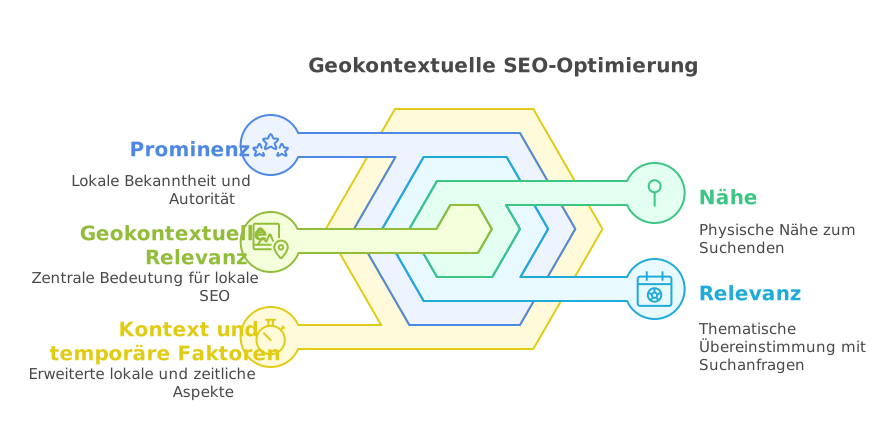
Geocontextual optimisation encompasses several dimensions:
- Proximity: Physical proximity to the searcher’s location.
- Relevance: The thematic alignment with the search query.
- Prominence: The business’s local reputation and authority.
- Context: The broader local context, including cultural and regional characteristics.
- Temporal factors: Time-related factors such as opening hours or seasonal relevance.
To address these factors effectively, the following strategies should be implemented:
- Hyperlocal content: Create content specifically tailored to individual districts, neighbourhoods or even streets.
- Local backlinks: Purchase links from locally relevant websites such as business directories, local news portals or partner businesses.
- Localised landing pages: Develop specific landing pages for each location with unique, location-based content.
- Local schema markups: Implement LocalBusiness schemas with precise geographical coordinates and service areas.
- Consistent NAP data: Ensure that your name, address and telephone number are consistent across the web.
It is particularly important to integrate local signals into your overall content strategy. Rather than creating isolated ‘location pages’, local references should be naturally integrated throughout your content.
Example: An estate agent could create comprehensive neighbourhood guides featuring local statistics, school ratings and insider tips.
Google has significantly improved its ability to interpret local signals. Its AI algorithms now recognise authentic local insights and distinguish them from superficial attempts at localisation.
Authentic local stories, interviews with local figures or references to local events are ranked higher than generic content with inserted place names.
Mobile signals play a central role in local search, as more than 80 per cent of local search queries originate from mobile devices. Make sure your website is not only optimised for mobile, but also offers location-specific mobile features such as click-to-call buttons, maps with directions or location-based offers.
Don’t forget how important user-generated content (UGC) is for local relevance. Customer reviews with a local focus, check-ins and local mentions on social media are strong signals of geo-contextual relevance.
Develop strategies to actively encourage this content, for example through local hashtag campaigns or review incentives.
What does the use of machine learning technologies mean for search engine optimisation?
Machine learning has evolved from a theoretical vision of the future into a practical tool for SEO professionals. Leading companies are using ML technologies to make data-driven decisions and gain a competitive edge. Even with limited technical resources, ML-based strategies can be implemented.
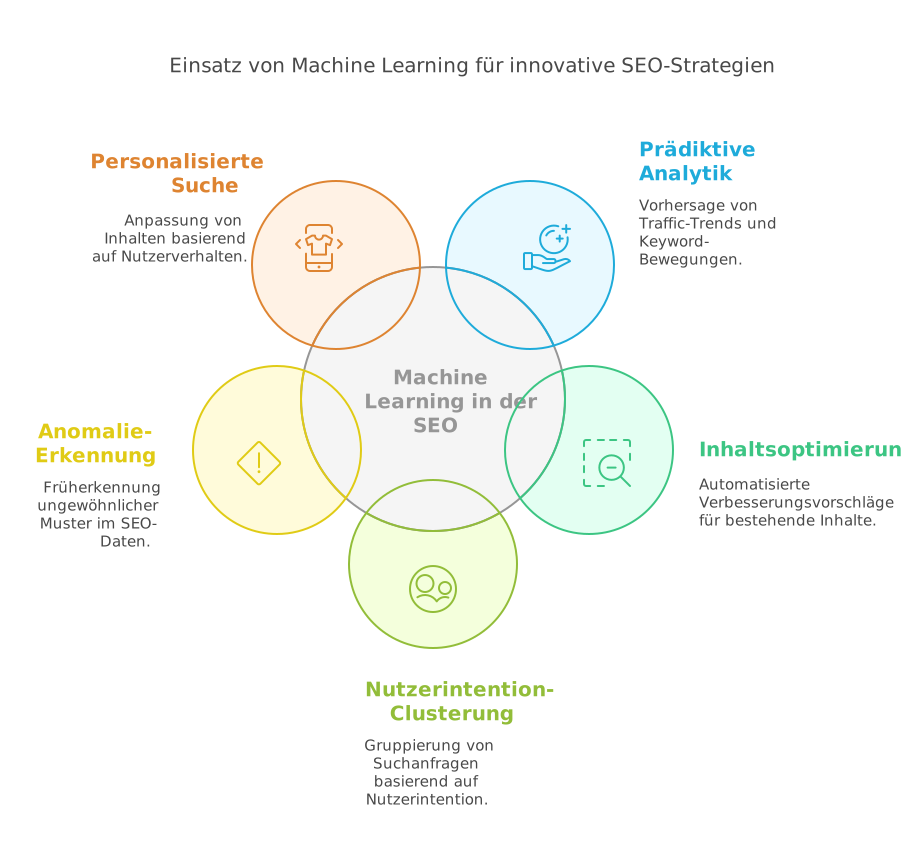
The key areas of application for machine learning in search engine optimisation are:
- Predictive analytics: forecasting traffic patterns, keyword trends and potential changes in rankings.
- Content optimisation: Automated analysis and suggestions for improving existing content.
- User intent clustering: Grouping keywords and search queries according to the underlying user intent.
- Anomaly detection: Early detection of unusual patterns in traffic, rankings or crawling behaviour.
- Personalised Search Experience: Tailoring website content based on user behaviour and preferences.
A practical example of the use of machine learning is content gap analysis. ML algorithms can analyse millions of pieces of ranking data to identify topics that perform well amongst competitors but are missing from your own website. These insights form the basis for strategic content planning.
For technical SEO optimisation, ML-based crawling tools such as DeepCrawl or Botify offer deep insight into the structure and performance of your website. They detect patterns in server log data and can predict which technical improvements will have the greatest impact on your ranking.
Even without your own data science team, you can benefit from ML technologies. Many SEO platforms already integrate machine learning components:
- SEMrush’s Topic Research Tool: Uses ML for topic clusters and content recommendations.
- Clearscope: Analyses top rankings and provides AI-based content optimisation suggestions.
- MarketMuse: Assesses content quality and identifies topic gaps using ML algorithms.
- Can I Rank: Uses predictive models to assess the ranking potential for specific keywords.
A particularly effective approach is to integrate ML insights into A/B testing. Rather than relying on gut instinct, ML-based hypotheses regarding headings, meta descriptions or content structures can be systematically tested and validated.
For advanced users, cloud platforms such as the Google AI Platform or AWS SageMaker offer beginner-friendly environments for conducting their own ML experiments.
Using pre-built models and user-friendly interfaces, it is possible, for example, to generate conversion forecasts or analyse user behaviour on the website.
The future of machine learning in search engine optimisation lies in real-time optimisation.
ML systems are capable of continuously learning and adapting to changing search algorithms, user behaviour and competitive landscapes. In an increasingly complex SEO environment, this adaptive optimisation is becoming a key differentiating factor.
Wow, what exciting times for all of us in online marketing! The world of SEO and AI is moving faster than we thought, and yes, it can sometimes feel overwhelming. But you know what? This is precisely where the greatest opportunities lie for you and your business.
The companies that are bold enough to try new approaches right now will be rewarded. It’s not about jumping on every trend, but about finding the right levers for your business and using them wisely.
The digital era is constantly evolving – and it’s set to get even more exciting! Algorithms are getting smarter, search results more personalised, and AI tools even more user-friendly.
Those who roll up their sleeves now will gain a head start from which they can benefit for a long time to come.
Are you stuck or wondering how you can use these trends to your business’s advantage? Then let’s have a chat! Here at Zündstoff Marketing, we’re passionate about tackling precisely these challenges.
Simply get in touch and we’ll be more than happy to support you with search engine optimisation.
Answers to the most frequently asked questions about our blog post ‘SEO and Artificial Intelligence Trends: The Comprehensive Overview’.
Frequently Asked Questions (FAQs)
How is artificial intelligence (AI) changing search engine optimisation (SEO)?
AI has become central to modern SEO. It influences how Google understands search queries (search intent), personalises search results and assesses the quality of content. For website owners, this means using AI tools for research and analysis and creating content that is optimised for both humans and AI algorithms.
What is E-E-A-T and why is it so important for my Google ranking?
E-E-A-T stands for Experience, Expertise, Authoritativeness and Trustworthiness. It is Google’s framework for assessing the quality and trustworthiness of content. Particularly for important topics such as finance or health (YMYL), demonstrating E-E-A-T through author profiles, sources and personal experience is crucial for achieving good rankings.
What are the Core Web Vitals and do I need to worry about them?
Yes, absolutely. The Core Web Vitals (LCP, FID, CLS) are metrics defined by Google that measure a website’s technical user experience, specifically loading speed, interactivity and visual stability. They are a direct ranking factor, which is why good technical performance is essential for visibility.
Are backlinks still among the most important ranking factors?
Yes, but the rules have changed. The sheer number of backlinks has become irrelevant. Today, it’s quality, topical relevance and naturalness that count. A single link from a highly reputable, topic-relevant website is worth more than hundreds of low-quality links.
How do I get star ratings or other additional information to appear in my Google search results?
These enhanced search results, also known as ‘rich results’, are enabled by implementing structured data (Schema.org markup) on your website. For reviews, use the ‘AggregateRating’ schema; for events, the ‘Event’ schema; and for products, the ‘Product’ schema.
My content isn’t ranking, even though it’s well written. What could be the reason for this?
There could be many reasons for this, but it’s often down to a mismatch with the search intent. Your text may not be answering the specific question the user has in mind. Analyse the top 10 results for your keyword: what kind of content is ranking there (lists, guides, product pages)? Adapt your format to users’ expectations and ensure that your E-E-A-T (Expertise, Authoritativeness, Trustworthiness) is clearly evident.
What are zero-click searches and are they bad for my website?
A zero-click search occurs when the answer to a query is displayed directly in the Google results (e.g. in an answer box) and the user no longer needs to click on a website. This means less traffic, but it can increase visibility and brand authority. The strategy is to be optimised for these direct answers whilst also offering more in-depth content that encourages users to click.
Why has accessibility suddenly become an SEO issue?
From June 2025, accessibility will become a legal requirement for many businesses (not in Switzerland, but it is advisable to take this into account). That said, many accessibility criteria (e.g. correct heading structure, alt text for images) overlap directly with SEO best practices. Google favours websites that are accessible to all users, so it is an important indirect ranking factor.