

What is Gemini Omni?
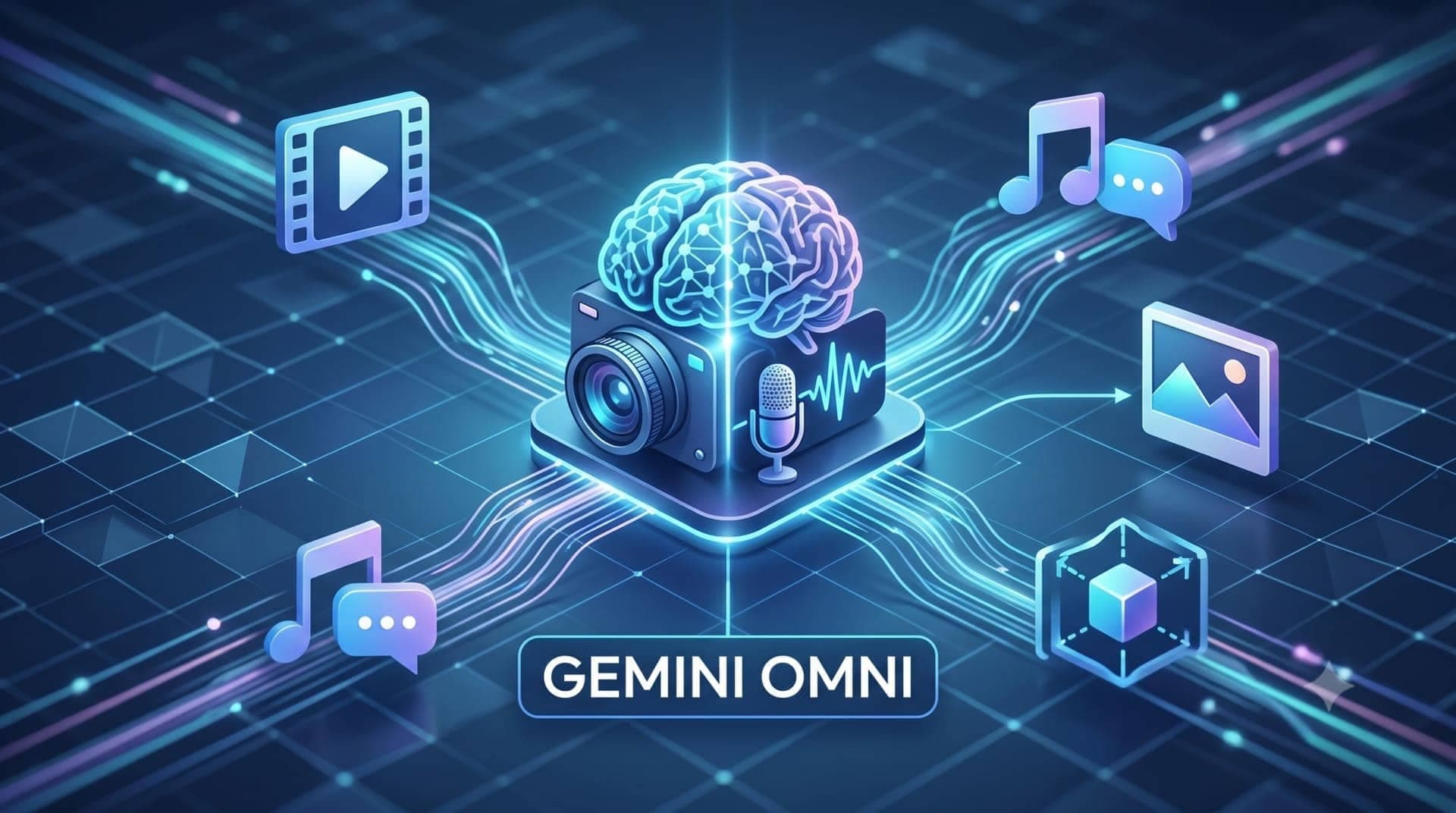
Gemini Omni is not a single application, but a family of models. Google describes it with the tagline that it can be used to ‘create anything from any input’, starting with video. The model accepts any combination of text, images, audio and existing video as input and returns video, edited images or a digital avatar, with shared context across all modalities.
Table of contents
The key difference from the previous architecture. Until the launch, Google’s AI media stack used separate models for each modality: Veo for video, Imagen for images, a separate model for image editing, and another for music. Producing a finished video meant chaining these tools together one after the other. Gemini Omni brings all this together in a single model.
The first publicly available model is Gemini Omni Flash. As with Google’s other product lines, ‘Flash’ stands for the faster, more affordable version. A model called Gemini Omni Pro has been announced, but no release date has been given.
From the experience of Zündstoff Marketing
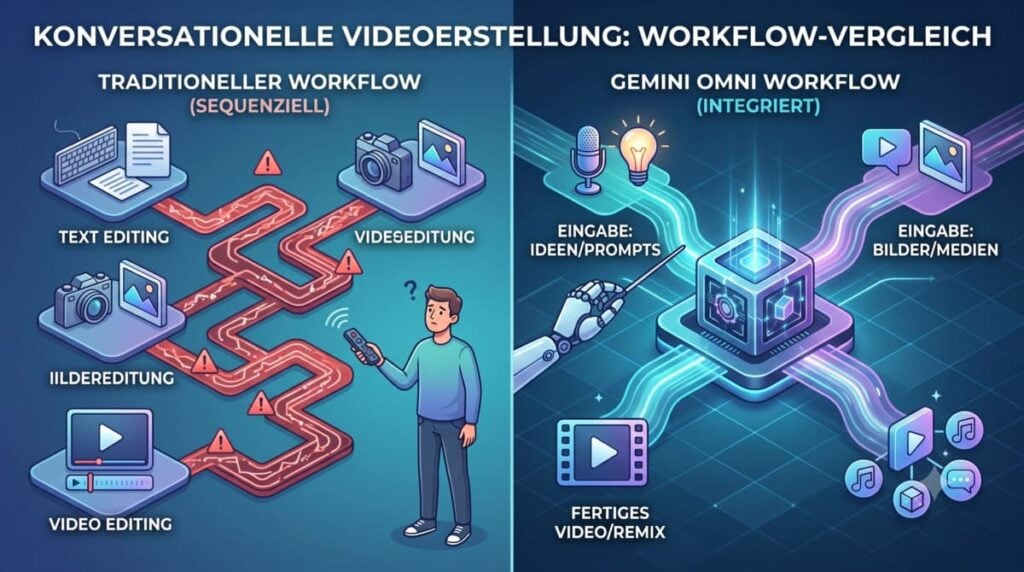
The move from separate specialised models to a natively multimodal system is more than just a technical gimmick. When a single model retains context across all steps, it eliminates friction at the interfaces between tools – precisely where most errors and correction loops arise in chained workflows.
Gemini Omni and Veo: not a replacement, but coexistence
A common misconception is that Gemini Omni is replacing the Veo video model. This is not the case. Google explicitly positions both as separate model interfaces. In Google Flow, the paid video workspace, Gemini Omni and Veo coexist. Veo remains Google’s specialised video product line, whilst Gemini Omni is built around Gemini-native creation and conversational editing.
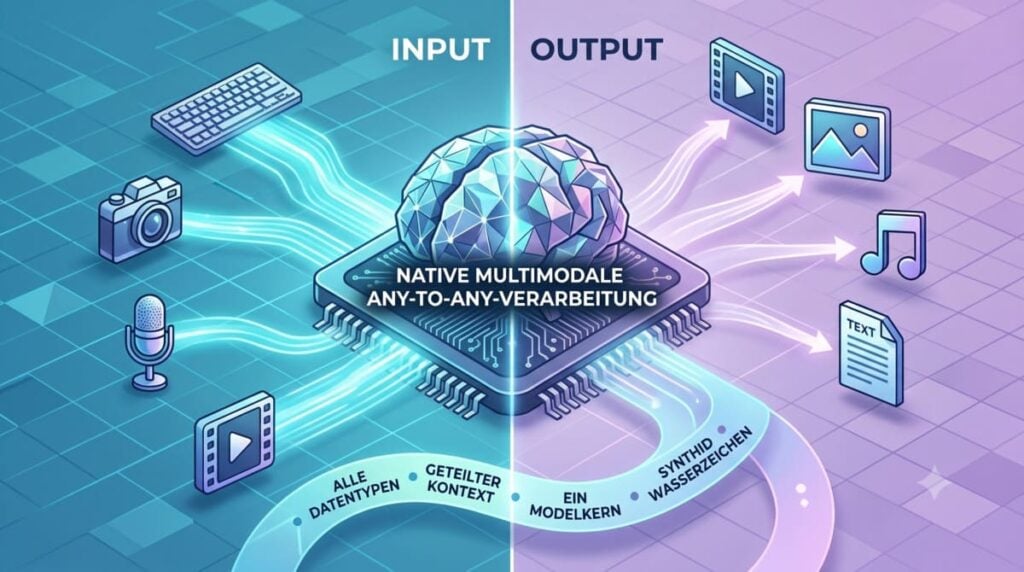
So, to clarify where Omni stands: it is not a successor that replaces an older tool, but a new, broader approach that starts with video.
How Gemini Omni works
Conversational video creation
The core workflow is dialogue-based. Instead of switching between programmes for text, images and editing, you describe what you want and refine the result using further prompts. Rather than starting from scratch, a clip can be iteratively adjusted using instructions such as ‘make the lighting warmer’ or ‘replace the cat with a corgi’. This genuine iterative editing through dialogue is one of the features Google is highlighting.
Inputs and outputs
Gemini Omni Flash accepts text, images, audio and video as input – either individually or in combination – and uses them to generate a clip of around ten seconds with synchronised audio. Features supported include text-to-video, image-to-video and video-to-video remixing.
Important limitations at launch
There are two limitations you should be aware of before planning to use Omni Flash in a production environment:
- Ten-second cap: Clips are limited to ten seconds. Google describes this as a deployment decision aimed at making the model widely accessible, rather than a technical limitation. For formats beyond short clips – such as standard YouTube videos, longer TikToks and Instagram Reels – Omni Flash is therefore not the right tool at present.
- Audio editing restricted: The editing of speech and audio within generated videos has been deliberately disabled. This capability is considered the highest risk in the architecture and has been intentionally restricted.
Furthermore, every video generated with Omni bears an invisible SynthID watermark. This can be verified via the Gemini app, Chrome and search, and cannot be disabled via the API. For commercial use subject to labelling requirements, this is a factor that must be taken into account from the outset.
Access and availability
Gemini Omni Flash went live simultaneously across three interfaces on 19 May 2026:
| Platform | Access | Requirements |
|---|---|---|
| YouTube Shorts Remix / YouTube Create | Free | Logged-in users aged 18 and over |
| Gemini app | Paid | AI-Plus, Pro or Ultra subscription |
| Google Flow | Paid | AI-Plus, Pro or Ultra subscription |
Its free availability via YouTube is strategically significant: Google is using YouTube distribution to bring the model to a very large audience at no extra cost. In doing so, Google is treating Omni Flash first and foremost as a consumer product and only subsequently as a developer product.
An API for developers and businesses has been announced and is set to follow in the coming weeks. Prices for this had not yet been published at launch. Anyone wishing to integrate Omni into their own workflows should keep an eye on the API rollout; until then, they are limited to the consumer interfaces, including a watermark that cannot be disabled.
Implications for marketing and content creation
The cost-effective production of short video clips lowers a barrier that smaller businesses in particular often struggle with: the budget and time required for high-quality video content. Omni Flash is currently ready for use with ‘Shorts’-style social media formats, but not yet for longer formats.
Francisco Montemari of Zündstoff Marketing puts it this way: “For us, the real value lies in rapid testing. Anyone in performance marketing who can generate several clip variants in a matter of minutes learns more quickly what works, without having to invest in expensive post-production beforehand. The key is simply to be aware of the limitations: ten seconds, no audio editing, and a watermark that must be declared. Anyone who ignores this will end up with compliance issues rather than reach.”
In practice, this means that Omni Flash is currently well suited to rapid A/B testing of short social media clips and for initial concept variations. For final campaign assets of standard length, the existing toolkit remains relevant until Omni Pro or the API provide more flexibility.
Summary
Gemini Omni marks an evolutionary step in AI-powered video production, as it is a native multimodal system that processes text, images, audio and video simultaneously within a single model core. The technology relieves marketing teams of friction-prone, chained workflows and enables extremely fast, cost-effective creation and iterative editing of video assets via simple, dialogue-based commands. At the same time, the current launch status of Gemini Omni Flash requires a clear understanding of existing limitations, such as the 10-second cap, restricted audio editing and the mandatory labelling via the unavoidable SynthID watermark. The future of content creation lies in this deep, conversational media integration, whilst specialised high-end models such as Veo will continue to coexist for complex projects for the time being.
Zündstoff Marketing recommends: Use Gemini Omni Flash early on as a strategic tool for agile A/B testing in performance marketing to learn at lightning speed which visual hooks convert – without the need for expensive post-production – whilst always keeping an eye on compliance guidelines.
Frequently Asked Questions (FAQs)
What is Gemini Omni?
Gemini Omni is a multimodal model family from Google, unveiled on 19 May 2026 at Google I/O. It processes text, images, audio and video in a single prompt and uses this to generate video, edited images or avatars. The first model available is Gemini Omni Flash.
Does Gemini Omni replace the Veo model?
No. Google positions Omni and Veo as separate model families. In Google Flow, both exist side by side; Veo remains Google’s specialised video model line.
How long can the videos be?
Gemini Omni Flash generates clips of around ten seconds. This limit is a deliberate rollout decision, not a technical limitation. Longer clips are on the roadmap.
How much does access cost?
Via YouTube Shorts Remix and YouTube Create, Omni Flash is free for logged-in users aged 18 and over. In the Gemini app and in Google Flow, an AI Plus, Pro or Ultra subscription is required. An API for developers and businesses will follow in the coming weeks.
Are there any restrictions on editing?
Yes. Editing of speech and audio within generated videos is disabled at launch. Furthermore, every video carries a SynthID watermark that cannot be removed and must be disclosed upon publication.
When will the API be available?
Google has announced that the API for developers and business customers will be available in the weeks following the launch. Pricing and technical details were not yet available at the time of launch.