
Table of Contents
If, like many other executives and tech enthusiasts, you’re currently feeling a bit overwhelmed by the AI wave, then you’ve come to the right place. I’ve been observing for some time now how companies are grappling with the rapid development of AI technologies. Many feel overwhelmed by the flood of new models, the complexity of integration, soaring costs and constant concerns about data security and vendor lock-in (source: Adito).
You may be familiar with this: you want to use AI, but the path to getting there is rocky and confusing. It’s like standing in front of a huge buffet, but not knowing what to try first or whether it will even agree with you. The AI landscape is changing so fast that it’s hard to keep up, let alone develop a sustainable strategy.
This uncertainty often leads to hesitation, to siloed solutions that don’t communicate with one another, or worse still, to costly misjudgements that jeopardise competitiveness. I have seen projects fail because the chosen AI solution wasn’t flexible enough to keep pace with new developments, or because data protection concerns blocked its use (source: Portkey). You invest time and money, only to realise that you’ve reached a dead end or lost control over your own data and processes. This is not only frustrating, but can also threaten a company’s very survival in a dynamic market. The fear of missing out is great, but the fear of backing the wrong horse is often even more paralysing.
But what if there were a solution that took precisely these worries off your hands? A platform that gives you the freedom to use the best AI models for your specific needs, without tying you to a single provider? A piece of software that prioritises security and compliance and integrates seamlessly into your existing IT landscape? This is exactly where Langdock comes in. From my perspective as a marketing and IT expert, Langdock isn’t just another tool, but a strategic partner that empowers businesses to realise the full potential of AI in 2025 and beyond – confidently and with a future-proof approach (source: Langdock). In this article, I’d like to show you how, in my opinion, Langdock achieves this and why it might be of interest to you.
What do I see as the main focus of this article on Langdock?
In this article, I’ll be taking a very close look at Langdock – specifically as the module-independent AI software platform that I’m convinced can make all the difference for many businesses.
I’m not just interested in listing the features for you. Rather, from my perspective as someone who sees things through both a marketing and an IT lens, I want to show you why this model independence in particular is such a game-changer and how Langdock manages to reconcile flexibility, security and user-friendliness (source: Langdock).
I’ll analyse how Langdock helps businesses establish AI not just as an isolated tool, but as an integral part of their digital strategy – a sort of ‘operating system for AI’, as Langdock itself puts it (Source: Langdock).
We’ll look at how this enables you to retain control over your data (source: Langdock), optimise costs (source: Langdock) and, at the same time, be well-equipped to cope with the rapid developments in the field of AI (source: Langdock).
The ability to deploy different AI models as and when required, without having to change the entire infrastructure, is a strategic advantage that I cannot emphasise enough.
My aim is to give you a comprehensive overview that goes beyond mere product descriptions and helps you understand the strategic value a platform like Langdock can bring to your business.
It’s about more than just features; it’s about a new way of thinking about and shaping the use of AI within a business.
Why, in my experience, is module-independent AI software so crucial in 2025?
When I look back over the last few years and examine the forecasts for 2025 (source: Morgan Stanley), I see an AI market that is absolutely brimming with dynamism. New, more powerful models are constantly emerging, old ones are being superseded, and specialisation is increasing rapidly (source: Langsikt).
Anyone who ties themselves to a single provider or a single model here runs the risk of quickly falling behind or being stuck with a sub-optimal, expensive system. I’ve experienced this myself in projects: a promising model was suddenly no longer state-of-the-art, or costs unexpectedly skyrocketed.
This fast-paced nature is both a blessing and a curse: on the one hand, new possibilities are constantly opening up; on the other, planning becomes more difficult if you do not prioritise flexibility.
Module independence, as offered by platforms such as Langdock, is a real game-changer in this regard.
Imagine having a central hub through which you can flexibly access the best models from various providers, be it OpenAI, Anthropic, Google, Meta or smaller specialist providers (source: Langdock). You can choose the model that is best suited and most cost-effective for the task at hand, such as text generation, data analysis or image generation (source: DEV).
To me, this is the epitome of agility and future-proofing. It enables companies not only to react to trends, but to actively capitalise on them by always deploying the optimal technology for the task at hand.
Tip: I strongly advise you to put the issue of model independence right at the top of your checklist for any AI investment. It is a crucial factor in remaining flexible and competitive in the long term.
Furthermore, model independence addresses the growing problem of vendor lock-in (source: Aixplain). Many companies I speak to fear this dependency. A model-independent platform gives you the freedom to make decisions based on your needs, rather than on the limitations of a single provider.
This is a strategic advantage which, in my opinion, cannot be overestimated. It’s about having control over your technological decisions and, ultimately, about your company’s independence.
What exactly is Langdock all about? Let me break it down for you.
As I see it, Langdock is far more than just a chatbot provider. It is a comprehensive enterprise AI platform designed to offer companies a centralised, secure and flexible solution for deploying generative AI (source: Langdock). Langdock was founded in Germany in 2023 (source: Servicelist) and has since attracted considerable attention, not least through a funding round with General Catalyst (source: Codelabs Academy).
This shows me that it is addressing a genuine need in the market, namely the gap between pure AI models and their practical, secure application in an enterprise context.
The platform essentially bundles several core products: an intelligent chat for employees, the ability to build specific AI assistants, an enterprise-wide search function, a unified API for developers and, what I find particularly exciting for the future, agents or workflows for automating complex tasks (Source: Langdock).
As already mentioned, the whole system is designed to be model-agnostic (Source: Langdock). It is this combination of different tools on a single platform that sets Langdock apart from many siloed solutions.
Personally, I see Langdock as a sort of ‘AI operating system’ for businesses (Source: Langdock). It creates a layer between the various AI models and the users or business processes, ensuring order, security and efficiency. Just as an operating system on a computer enables and manages the use of various software applications, Langdock aims to orchestrate the use of different AI models and applications within a business.
What is the underlying idea behind my perspective on Langdock?
When I talk about Langdock, I am thinking of a company that utilises AI confidently and strategically. I do not see Langdock as an isolated tool, but as an enabler for far-reaching transformation. The founders of Langdock themselves believe that AI can increase the productivity of knowledge workers tenfold and that this requires an application layer between humans and the model (source: Langdock).
I fully share this vision. It is not about replacing people, but about enhancing their capabilities through intelligent tools and freeing them up to focus on more creative and strategic tasks.
I’d like to show you how you can use Langdock to create an AI-supported working environment in which employees’ workloads are reduced, new insights are gained and innovative solutions can be developed more quickly – all whilst maintaining your data sovereignty and flexibility (source: Langdock).
It’s about democratising AI – that is, making it accessible to many employees without losing control over the technologies used and, above all, the data being processed. In my view, striking this balance is crucial for a successful and sustainable AI implementation.
Based on my analysis, which key problems does Langdock offer a solution for?
Based on my analysis of the current challenges companies face when deploying AI (source: Aixplain), Langdock addresses several key issues at once:
- Vendor lock-in: Thanks to its model independence, Langdock avoids the dangerous dependence on individual LLM providers (source: Langdock). I consider this to be one of the biggest advantages, as it enables companies to remain flexible and not be at the mercy of a single provider’s pricing or product strategies.
- Data protection and compliance (GDPR): Langdock places great emphasis on security, EU data hosting and certifications such as ISO 27001 and SOC 2 Type II (source: Langdock). This is essential, particularly for companies in the DACH region, and builds a foundation of trust for handling what is often sensitive business data.
- Complexity of AI integration: The platform simplifies access to various models and provides tools to integrate AI into existing processes and systems without having to reinvent the wheel every time (source: Langdock). This lowers the barriers to entry and speeds up implementation.
- Loss of control and shadow IT: By providing a centralised, authorised platform, companies can counteract the uncontrolled proliferation of AI applications by employees (Source: Langdock). This is a key aspect of IT governance and security.
- Lack of scalability and future-proofing: The flexible architecture and the ability to integrate new models and functions make Langdock a future-proof investment (source: Langdock). This means companies are better equipped to cope with ongoing developments in the field of AI.
Note: I often see companies tackling these issues individually, thereby wasting a great deal of energy and money. Langdock offers a holistic approach here, which I consider very promising as it creates synergies and supports a coherent AI strategy.
The fact that Langdock is not merely a technological solution, but also addresses strategic business risks such as vendor lock-in and compliance breaches, is a key point. The aim is to enable a sustainable AI strategy in which innovation and control go hand in hand.
Many companies only realise how critical these aspects are at a late stage, often only once they are already locked into a dependency or facing compliance issues. A platform that minimises these risks from the outset is therefore worth its weight in gold.
What are the key features of Langdock that I wouldn’t want to keep from you?
Langdock presents itself as an “all-in-one AI platform” or even an “AI operating system” (source: Langdock), and in my opinion, this is well reflected in the range of its core features. I’d like to give you an overview here, based on what I’ve seen on their website and in various reports (source: Langdock):
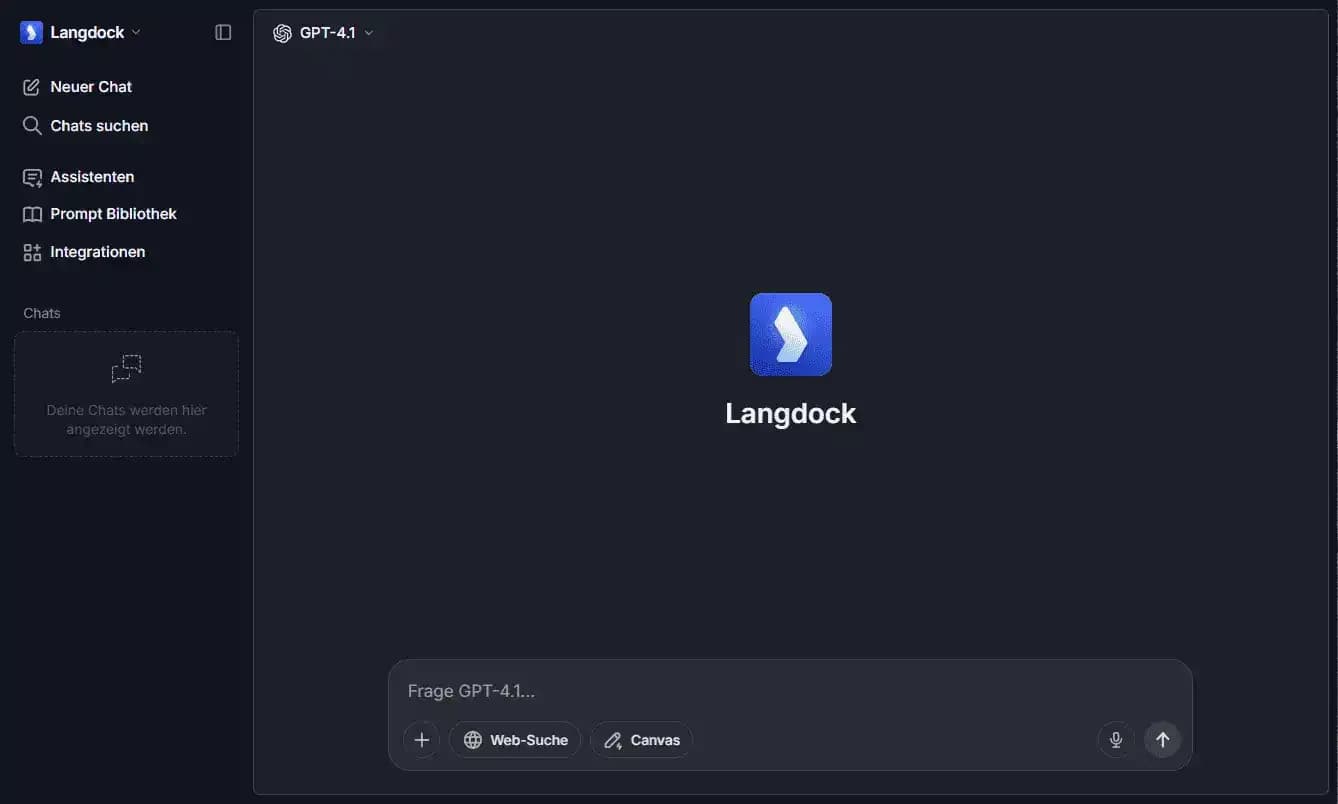
- AI Chat (Langdock Chat): This is, so to speak, the basis for day-to-day interaction with AI for all staff members. You can use it to draft emails, analyse data, generate code and much more. I find the ability to upload documents (PDF, DOCX, CSV, etc.), images and even audio/video files and use them in the chat particularly important, as well as the web search function for up-to-date information (source: Langdock). It is model-agnostic, meaning you can choose the most suitable model for your query (source: Langdock). This flexibility directly within the chat interface is a major advantage for everyday use.
- AI Assistants (Langdock Assistants): This is where things get really exciting for specific use cases. You can configure your own AI assistants with custom instructions and your own knowledge (uploaded documents, data from integrations, vector databases) (source: Langdock). These assistants can then be shared and even used externally via Slack, Teams or an API. They can also perform actions in third-party systems (e.g. drafting emails, creating Jira tickets), which I consider a major step towards genuine process automation.
- Enterprise Search (Langdock Search): An AI-powered search feature that enables you to search all connected enterprise applications and data sources simultaneously. This can significantly speed up the process of finding information. It is important to note here that Langdock mirrors the access permissions of the source systems, so that everyone only sees what they are authorised to see. This is a crucial factor for data security and user acceptance (source: Langdock).
- Unified API (Langdock API): This is a key feature for developers. A single API to access all major LLMs hosted in the EU and the US. This significantly simplifies the development of custom AI applications and integration into existing systems. There is a Models API and an Assistants API. This standardisation reduces complexity and development time (source: Langdock).
- Agents / Workflows (Langdock Agents/Workflows): This is the area which, in my view, is set to become much more important. The aim here is to create custom AI workflows for complex, multi-stage tasks and to run them automatically, ideally with ‘human-in-the-loop’ control steps for critical actions. This is the pinnacle of AI-powered automation (source: Langdock).
Other important aspects that caught my attention: the Prompt Library for sharing prompts within a team (Source: Langdock), the wide range of integrations with tools such as Jira or HubSpot (Source: Langdock), the comprehensive security measures and the customisation options (Source: Langdock). The availability of mobile and desktop apps (source: Langdock) is also important for flexible use.
This combination of features shows that Langdock caters to both ‘ordinary’ employees and specialist developers or AI project managers. It is this holistic approach that sets it apart from pure chat tools or API aggregators and supports a company-wide AI strategy.
Langdock Product Overview – What’s behind it?
| Product | Core features | Key benefits for you |
|---|---|---|
| AI Chat | Model-independent text generation, document/image/audio/video upload, web search, basic data analysis. | Fast, flexible AI support for day-to-day tasks for all staff, direct access to company knowledge. |
| AI Assistants | Your own AI assistants with custom instructions and knowledge (documents, integrations, vector databases), actions. | Tailor-made AI solutions for specific use cases, automation of sub-processes, shareable within the team. |
| Enterprise Search | AI-powered, cross-application search across corporate data, with permissions mirrored. | Instantly find relevant information across system boundaries, saving time. |
| Unified API | A single API for all LLMs (Models API), Assistants API, key management, GDPR-compliant. | Simplified development of your own AI applications, flexible integration, cost control. |
| Agents / Workflows | Creation of complex, multi-stage AI workflows, automation, human-in-the-loop (planned). | Automation of demanding processes, increased efficiency for complex tasks. |
Note: This table is designed to help you quickly grasp the individual components of Langdock and their respective roles. It is clear that the platform is designed to meet a variety of needs within a company.
What does model independence in Langdock actually mean for your business from my perspective?
When I talk about model independence in Langdock, I mean one thing above all else: freedom and flexibility for you and your business (source: Langdock). Imagine no longer being tied to the whims or pricing policies of a single AI model provider. Langdock acts as a sort of universal adapter or hub, giving you access to a wide range of Large Language Models (LLMs).
In practical terms, this means that via the Langdock platform, you can access models from leading providers such as OpenAI (e.g. GPT-4o, GPT-4o Mini), Anthropic (e.g. Claude 3.5 Sonnet, Claude 3.7 Sonnet), Google (e.g. Gemini 1.5 Pro, Gemini 2.0 Flash), Meta (e.g. Llama 3.1) and Mistral (source: Langdock).
And that’s just a snapshot; the list is constantly expanding. This dynamic adaptation to the market is a core promise. You can even bring your own API keys for specific models (“Bring Your Own Keys” – BYOK) or integrate your own, finely tuned models (“Bring Your Own Models” – BYOM). This gives you maximum control over costs and performance and enables you to incorporate even very specific or experimental models into your strategy.
What advantages do I see arising from this independence?
In my view, this offers tangible benefits:
- Cost optimisation: You can choose the model that offers the best value for money for each task. Not every problem requires the most expensive and largest model (source: Langdock). Sometimes a smaller, faster model is perfectly adequate and saves you money.
- Best results for every task: Different models have different strengths. One model might be better at creative writing, whilst another excels at code generation or the analysis of structured data (source: Langdock). With Langdock, you can, so to speak, ‘cherry-pick’ and select the optimal tool for each specific requirement.
- Risk minimisation (avoiding vendor lock-in): You are not dependent on a single provider. Should a provider drastically increase its prices, discontinue its model or see a decline in quality, you can switch relatively easily (source: Langdock). This is an enormous strategic advantage and ensures your ability to act.
- Future-proofing: The world of AI is evolving at breakneck speed. With a model-agnostic platform, you’re better equipped to quickly adapt to new, groundbreaking models as soon as they become available. You stay at the cutting edge without having to constantly overhaul your underlying infrastructure (source: Langdock).
- Compliance and data sovereignty: You can choose models that meet your specific compliance requirements, e.g. regarding the hosting location (EU/US) (source: Langdock).
Please note: Just because you have many models to choose from does not mean that the choice is always easy. It does require a certain understanding of which model is best suited to which purpose. But Langdock also offers support here, for example through default model settings or the opportunity to share knowledge within the community.
The ability to pursue a multi-LLM strategy – in other words, not relying on a single ‘all-rounder’ model, but specifically selecting the best tool for each task – is a crucial factor. This enables companies to optimise costs, quality and innovation simultaneously. Langdock provides the technical foundation for this and is what makes such strategies truly viable in the first place.
In my view, how flexibly can you respond to new AI models with Langdock?
My assessment is: very flexibly! Langdock itself emphasises that it aims to offer “the best models from all providers on a single platform”. The frequency with which new models are integrated, as can be seen in the changelog (e.g. GPT-4o, Claude 3.7 Sonnet, Gemini 2.0 Flash, DeepSeek-R1) (Source: Langdock), speaks volumes. This continuous updating is a clear sign that Langdock understands the dynamics of the market and is actively responding to them.
For you, this means you don’t have to wait months for internal IT projects to test or use a new, promising LLM. As soon as Langdock has integrated a model, it is, in principle, available to you. This ability to adapt quickly is worth its weight in gold in the dynamic AI market of 2025 (Source: Uniphore). It significantly shortens the cycles from the discovery of a new model to its productive use.
The ability to integrate your own keys (BYOK) and even your own models (BYOM) (source: Langdock) gives you an additional level of flexibility that goes beyond what the platform itself offers.
Model independence – Which AI models will be available to you on Langdock (expected in 2025)?
| Providers | Well-known model examples | Typical strengths/areas of application |
|---|---|---|
| OpenAI | GPT-4o, GPT-4o Mini, o1 models, o3 Mini | Strong all-round capabilities, code generation, complex tasks, creative writing. o-models optimised for reasoning (source: Langdock). |
| Anthropic | Claude 3.5 Sonnet, Claude 3.7 Sonnet, Claude Opus | Large context windows, strong at dialogue, summaries, reliable and well-thought-out responses, good for enterprise applications (source: Langdock). |
| Gemini 1.5 Pro, Gemini 2.0 Flash | Multimodal capabilities (text, image, audio, video), integration with Google services, strong research and analysis capabilities (source: Langdock). | |
| Meta | Llama 3.1 (e.g. 70B) | Strong open-source alternative, good balance of performance and customisability, often used for specific fine-tuning (source: Techxinsights). |
| Mistral AI | Mistral Large 2, Codestral | High-performance European models, often with a focus on efficiency and specific tasks such as coding (Codestral) (Source: SERP). |
| DeepSeek | DeepSeek-R1 | Focus on strong reasoning capabilities; open-source for commercial use (source: Langdock). |
Note: This table is, of course, merely a snapshot and is intended to illustrate the range of options available. Actual availability and specific strengths will continue to evolve over time. The key point is that Langdock provides the infrastructure to make this diversity usable.
In my opinion, who is Langdock particularly well suited for?
Having taken a closer look at Langdock and its capabilities, it’s clear to me that the platform isn’t the same for everyone, but can offer enormous added value for certain business profiles and sectors. It’s like a good toolbox: not everyone needs every tool, but for certain tasks, some are simply unbeatable.
Fundamentally, I see Langdock as a solution for companies that want to approach AI seriously and strategically, that prioritise data control and security, and that seek the flexibility not to be dependent on a single AI provider. If these points are high on your list of priorities, then you should consider Langdock (source: Langdock).
In my experience, which company sizes benefit the most?
Although Langdock itself states that it is suitable for companies of all sizes, from start-ups to large corporations, my experience suggests different areas of focus:
- Small and medium-sized enterprises (SMEs): Langdock is often ideal for them. They usually do not have the huge in-house IT and AI departments that large corporations do, to handle complex in-house developments or manage various LLM APIs individually. Langdock offers a ready-to-use, secure yet flexible platform that enables them to become productive quickly and keep up with the big players. The personalised rollout support offered by Langdock (source: Langdock) is invaluable here for ensuring a smooth implementation and getting staff on board quickly.
- Large enterprises/corporations: Here, I see the main benefits in standardisation and governance. Large companies often have many departments experimenting with AI. Langdock can help to channel this uncontrolled growth, ensure compliance and create a uniform, secure foundation for AI applications across the entire organisation (source: Langdock). The option of self-hosting (source: Langdock) is often a decisive factor here for full data sovereignty. The example of Merck, which runs its myGPT Suite – with over 25,000 users – on the Langdock platform (Source: Tech), impressively demonstrates the potential on this scale.
- Ambitious start-ups: Tech start-ups in particular, which want to scale rapidly and integrate innovative AI features into their products, can benefit (source: Langdock). Langdock enables them to “bring their AI strategy to life in an afternoon” (source: Langdock), without getting bogged down in expensive in-house development or vendor lock-ins. The API is a key enabler here, allowing them to act quickly and flexibly.
Tip: I recommend that, regardless of your company’s size, you assess how important data sovereignty, flexibility in model selection and centralised AI management are to you. The more important these points are, the more Langdock is worth considering.
In which sectors do I think Langdock is a sensible choice?
In principle, I see potential applications in almost every sector, as generative AI is, after all, very versatile. However, a few sectors stand out to me in particular where Langdock can excel thanks to its strengths (security, flexibility, data connectivity):
- Financial services and insurance: Here, data protection, compliance (GDPR, BaFin requirements, etc.) and audit compliance are absolutely critical. Langdock’s focus on security and EU hosting (source: Langdock) is a major advantage here. I see use cases, for example, in the automated analysis of financial reports, supporting client advisers, or the development of fraud detection systems (source: Journal of Marketing & Social Research).
- Healthcare: As in the financial sector, data protection (HIPAA, GDPR) and the secure handling of sensitive patient data are crucial here (source: Notable). Langdock could assist here with the analysis of medical studies, supporting diagnostic processes (always with human oversight, of course) or optimising administrative processes.
- Industry and manufacturing: Here, I am thinking of the optimisation of production processes, predictive maintenance through the analysis of sensor data, quality control or the creation of technical documentation (source: Syracuse University). Integration with corporate data is key here.
- E-commerce and retail: personalisation of offers, optimisation of product descriptions, customer service chatbots, analysis of customer feedback – there are countless possibilities here (source: Syracuse University).
- Legal and consultancy: Analysis of large volumes of legal documents, drafting of contracts, and support with research. Langdock’s assistant templates already hint at such use cases (source: Langdock).
- Software development and IT services: code generation, debugging support, creation of documentation, automation of IT support (Source: Langdock).
- Marketing and media: content creation, campaign planning, SEO optimisation, analysis of marketing data (source: Langdock).
The assistant templates proposed by Langdock itself give a good impression of the diversity of sectors covered: InfoSec, Legal, Operations, Product, Sales, HR, etc. Langdock is particularly valuable for sectors with high compliance requirements and a significant need to process their own sensitive data. The platform can act here as a sort of ‘safe harbour’ for AI deployment, enabling innovation without breaching strict regulatory frameworks. This is a balancing act that many companies have to master, and Langdock appears to be building a solid bridge in this regard.
What specific benefits does Langdock offer companies and teams, as I see it?
When I summarise the various aspects of Langdock, I see a whole range of concrete benefits for companies and the teams working within them.
This isn’t just about abstract concepts, but tangible improvements in day-to-day work and strategic direction (source: Langdock). These benefits are often interlinked and reinforce one another.
In my experience, how can Langdock boost efficiency?
Increased efficiency is often the first thing that springs to mind when I think about the benefits of AI, and Langdock certainly delivers in this regard. I see this on several levels:
- Automation of routine tasks: Many repetitive tasks that are still carried out manually today – whether drafting standard emails, summarising documents, filling in forms or conducting initial research – can be handled by Langdock Chat or specific assistants (source: Langdock). This saves an enormous amount of time, which staff can then use for more demanding tasks. One example is e-learning design, where the use of AI saved two days per course, as Marco Ricciardi reports (source: Langdock).
- Faster information retrieval: The company-wide search function (Langdock Search) enables relevant information to be found from various sources in a flash (source: Langdock). No more tedious searching through various silos! This speeds up decision-making processes and reduces frustration.
- Accelerated content creation and code generation: Whether it’s marketing copy, blog articles, product descriptions or code snippets, Langdock can provide significant support here and speed up the creation process (source: Langdock). This leads to shorter time-to-market cycles.
- Optimised workflows: Langdock Agents/Workflows enable more complex, multi-stage processes to be automated or partially automated, which can lead to significant efficiency gains (source: Langdock). Walid Mehanna, Chief Data & AI Officer (e.g. at Merck), emphasises how Langdock Chat helps employees work more effectively and efficiently (source: Langdock). This is a statement drawn from real-world experience, which I take very seriously and which underlines the transformative power of such platforms.
How does Langdock support collaboration, as far as I can tell?
AI is often seen as a tool for individuals, but in my view, Langdock also has great potential to improve collaboration within teams:
- Shared knowledge and centralised prompts: The Prompt Library (source: Langdock) enables teams to share and jointly utilise tried-and-tested prompts. This means not everyone has to reinvent the wheel, and the quality of the AI results becomes more consistent. This promotes a shared learning curve when working with AI.
- Shared AI assistants: Specific assistants can be made available to entire teams or departments (source: Langdock). For example, a sales team can use a shared assistant for lead qualification, whilst a support team can use one to answer frequently asked questions. This promotes standardised processes and the exchange of knowledge, and ensures that everyone is working with the same, high-quality information.
- Collaboration on documents and tasks (implicit): When AI tools such as Langdock Chat and Assistants are integrated into daily workflows and, for example, help to create or analyse documents that are then reused by the team, this indirectly promotes collaboration. Walid Mehanna highlights that the option to collaborate on tasks has made the workflow incredibly efficient (source: Langdock).
- Integration with collaboration tools: Native integration with Slack and the planned integration with Microsoft Teams (source: Langdock) bring AI features directly into the environments where teams already collaborate. In my view, this is a very important factor for adoption and usage, as it breaks down barriers and seamlessly embeds AI into day-to-day work.
Note: I firmly believe that AI tools which promote collaboration have a much greater impact within a company than purely standalone solutions. Langdock seems to have understood this aspect and promotes a culture of sharing and jointly utilising AI resources.
According to my analysis, what cost savings are possible with Langdock?
Cost savings are, of course, a key factor in any business decision. With Langdock, I see potential for savings in several areas:
- Reduced licence costs for specialised tools: By bundling many AI functions (chat, analysis, content creation, automation) onto a single platform, it may be possible to avoid or reduce costs associated with various individual specialised AI tools. Consolidation onto a single platform can lead to direct savings here.
- More efficient use of models: Model independence allows the most cost-effective model to be selected for each task. There is no need to use expensive, high-end models for simple tasks. The option to bring your own keys (BYOK) can also save costs (source: Langdock).
- Lower development costs: The standardised API and the tools for creating assistants and workflows can reduce the effort – and thus the costs – involved in developing in-house AI applications. You build on an existing, solid foundation rather than having to develop everything from scratch (source: Langdock).
- Savings through process automation: The aforementioned increase in efficiency achieved by automating routine tasks and more complex workflows (source: Langdock) leads directly to cost reductions, as less working time is required for these tasks.
- Avoiding costs arising from poor decisions/vendor lock-in: The platform’s flexibility helps to avoid costly misinvestments in unsuitable or outdated AI solutions (source: Aixplain). Such strategic errors can prove very costly in the long term. Although Langdock charges a 15 per cent fee on model costs (source: Langdock), I believe that, when considering the overall costs, the picture is often positive due to the potential savings and strategic advantages mentioned above. After all, it is not just about the token prices themselves, but about the overall value, which also encompasses risk minimisation and future-proofing. A holistic view of cost-effectiveness is crucial here. The direct costs of using the model are only part of the equation; the indirect costs of problems avoided and the benefits of increased agility and efficiency often carry greater weight.
How does Langdock ensure data protection and GDPR-compliant use of AI?
The issue of data protection and GDPR compliance is absolutely central for me. And I must say, Langdock seems to have done its homework in this regard (source: Langdock). They clearly position themselves as a solution specifically tailored to the needs of European companies, which includes this aspect.
Langdock repeatedly emphasises “enterprise-grade security” (source: Langdock) and lists a range of measures and certifications designed to build trust. For companies working with sensitive data, this is not just a “nice-to-have”, but a fundamental requirement.
What specific measures does Langdock take to ensure data security?
From the information provided by Langdock (source: Langdock), the following points struck me as particularly positive:
- No training of models using customer data: Langdock assures us that neither they nor their integrated model providers use customer data to train their models (Source: Langdock). This is a crucial point for confidentiality and data integrity.
- Encryption: Data is encrypted both during transmission (in transit, minimum TLS 1.2) and whilst at rest (AES-256) (source: Langdock). This is a technical standard, but essential for data protection.
- EU data hosting: The Langdock app and databases are hosted within the EU (source: Langdock). For many companies, this is a fundamental requirement. Wherever possible, Langdock also ensures that its LLM providers are based in the EU (source: Langdock).
- Certifications and audits: Langdock is ISO 27001 certified and SOC 2 Type II audited (source: Langdock). These are recognised standards that demonstrate a high level of information security management.
- Access controls: Strict limitation of data access in accordance with the ‘principle of least privilege’ (source: Langdock). Only those who genuinely need the data are granted access.
- Regular security reviews: These include penetration tests carried out by independent third parties (source: Langdock).
- Self-hosting option: For maximum data sovereignty, Langdock offers the option to host the platform on the customer’s own infrastructure (source: Langdock).
- Custom data retention policies: Organisations can specify how long their data is stored (source: Langdock).
Together, these measures form a robust security framework designed to provide comprehensive protection for corporate data.
How does Langdock help with compliance?
Compliance with regulatory requirements, particularly the GDPR, is non-negotiable for companies in Europe. In my view, Langdock supports this in several ways:
- GDPR compliance as a foundation: Langdock is an EU-based company and is therefore directly subject to the GDPR. They state that they have developed the platform accordingly and, for example, have integrated a Data Processing Agreement (DPA) directly into their Terms and Conditions (Source: Langdock). Their DPA and Terms and Conditions were drawn up by EU lawyers and reviewed by many customers (source: Langdock).
- Transparency regarding sub-processors: Langdock undertakes to pass on its data protection obligations to sub-processors (i.e. the LLM hosts) (source: Langdock). The contracts with Microsoft, AWS and Google Cloud (source: Langdock) are designed to ensure that customer data is not misused for training purposes and, where possible, remains within the EU or is protected accordingly.
- Support in fulfilling data subjects’ rights: Thanks to the centralised platform and the (hopefully) robust administrative functions, it should be easier for organisations to comply with requests from data subjects for access, erasure or rectification.
- Prevention of shadow IT: A centralised, authorised AI platform such as Langdock reduces the risk of employees using uncontrolled and potentially non-GDPR-compliant AI tools (Source: Langdock). This is an often underestimated aspect of compliance that carries significant risks.
- Documentation and auditability: The certifications (ISO 27001, SOC 2) (Source: Langdock) indicate established processes that are also important for demonstrating compliance and supporting accountability.
Please note: Langdock can help you operate in compliance with the GDPR, but the ultimate responsibility for ensuring compliance with the GDPR when using AI models always lies with the organisation using them. You must therefore continue to carry out your own processes and risk assessments (keyword: data protection impact assessment).
Langdock’s security and compliance strategy is not merely a ‘tick-box approach’. Rather, it is a core component of its value proposition, particularly for the European market. The combination of technical measures, certifications and contractual agreements with LLM providers aims to establish a basis of trust. This basis of trust is essential for the widespread acceptance of AI within organisations. The aim is to enable innovation without compromising fundamental principles of data protection and data security.
How can Langdock be integrated and expanded, based on the information I have provided?
In my view, a key factor in the practical viability of an AI platform is its ability to integrate into existing system landscapes and be extended as required. A stand-alone solution, however good it may be, often causes more frustration than it brings benefits, as it disrupts the flow of data and requires additional manual steps. Langdock seems to have understood this and offers some interesting approaches here to truly embed AI into everyday business operations (source: Langdock).
What opportunities do I see for workflow automation with Langdock?
Workflow automation is, after all, something of a holy grail when it comes to boosting efficiency. Langdock addresses this primarily through its AI Assistants and the agents/workflows (some of which are still labelled as beta or ‘Coming Soon’) (source: Langdock).
- Assistants with actions: The AI Assistants can be configured not only to provide information, but also to carry out actions in third-party systems (source: Langdock). This is done via OpenAPI specifications. I imagine, for example, that following a customer enquiry, an assistant could directly draft a reply email in Outlook, create a new ticket in Jira or update a deal in HubSpot (source: Langdock). These are very specific automation steps that reduce manual work and speed up processes.
- Langdock Agents/Workflows: This involves creating more complex, multi-stage AI workflows (source: Langdock). You can think of it as various AI models and tools being orchestrated to carry out an entire process. Langdock also appears to be planning to introduce templates (“Agent Templates”) (Source: Langdock) and monitoring with “human-in-the-loop” safety mechanisms, which I consider very important for maintaining control (Source: Langdock).
- Integrations as the foundation: The basis for many automation processes is, of course, integrations. Langdock offers native integrations with many popular business tools (Jira, HubSpot, Google Sheets, Outlook, Google Calendar, Slack, Teams, Confluence, Google Drive, OneDrive, etc.) and the option to connect any APIs via OpenAPI Specs or JavaScript (source: Langdock). The ability to import website content or connect to vector databases (Qdrant, Chroma, Weaviate, Pinecone) is also planned or has already been implemented (source: SERP). This broad connectivity is crucial.
Tip: If you’re considering workflow automation, start with clearly defined, well-delimited processes. Don’t try to automate everything straight away. The “human-in-the-loop” feature that Langdock is planning for agents is a good approach to gradually build trust in automated AI processes.
What does the Langdock API offer, in my view?
The Langdock API is the centrepiece for developers and businesses wishing to integrate AI capabilities deeply into their own applications or systems (source: Langdock). In my view, it offers the following key benefits:
- Unified Access: A single API (“Models API”) for accessing a wide range of LLMs from different providers (source: Langdock). This saves developers the hassle of implementing and maintaining several different APIs. The API is compatible with OpenAI and Anthropic APIs, which makes migration easier (source: Langdock).
- Assistants API: In addition to the pure model API, there is also an API for programmatically interacting with the assistants configured in Langdock (including their knowledge and actions) and integrating them into your own environments. This opens up enormous possibilities for the personalisation of services.
- Key Management: Centralised management of API keys and setting of spending limits.
- GDPR compliance and EU hosting: API usage is also subject to Langdock’s strict data protection guidelines (source: Langdock).
- Flexibility: Supports parameters such as `stream` (for ChatGPT-style responses), `temperature`, `top_p`, `logit_bias`, etc., which allow for fine-grained control over model outputs (source: Langdock).
- Documentation and examples: Langdock provides documentation and code examples (e.g. for Python) to help users get started (source: Langdock).
I see the API as a powerful enabler for companies that want to go beyond standard applications and develop truly bespoke AI solutions without having to build the entire infrastructure for model management and access themselves.
How can custom AI assistants be created using Langdock?
Creating bespoke AI assistants is one of Langdock’s core strengths and, in my view, a very powerful tool. This is how I understand the process:
- Instructions: You define how the assistant should behave, what its personality is, what style it should use and what tasks it should primarily perform. Here, you can also specify when it should, for example, use web search.
- Knowledge integration: This is the key feature. You can provide the assistant with specific knowledge by uploading documents (PDFs, Word, Excel, etc.), making data from connected systems (Google Drive, Confluence, databases) available, or connecting it to vector databases. Langdock also offers ‘Knowledge Folders’ for this purpose (source: Langdock).
- Capabilities/Actions: You can allow the assistant to perform specific actions by integrating OpenAPI specifications for third-party tools or internal systems (source: Langdock). It can then, for example, write data to other systems or retrieve it from them. Image generation and data analysis are also possible capabilities.
- Testing and customisation: Once configured, you can test the assistant and refine its instructions and knowledge until it meets your requirements.
- Sharing: Completed assistants can then be shared with individual colleagues, teams or the entire organisation. There is an ‘Assistant Library’ to make them easy to discover.
- Assistant Forms: A recent feature (Feb 2025) (Source: Langdock) allows you to create structured input forms for assistants, which simplifies interaction for users and can improve the quality of results.
- Memory function: Assistants can remember information from previous interactions to provide more personalised responses (Feb 2025) (Source: Langdock). Langdock itself lists a wide range of assistant templates for areas such as InfoSec, Legal, Operations, Product, Sales, HR etc., which demonstrates the breadth of possibilities.
Langdock’s integration and extension capabilities – in particular the combination of a flexible API and a user-friendly assistant builder with knowledge integration – position the platform as a kind of “AI middleware”.
It abstracts the complexity of individual LLMs and enables companies to embed and orchestrate AI functionality relatively easily within their specific contexts. This is an important step towards transforming AI from an isolated technology into an integral part of business processes.
According to my research, how is Langdock already being used successfully in practice?
Theory is all well and good, but as a practitioner, I am naturally most interested in how a solution performs in the day-to-day reality of business. According to Langdock itself, the platform is used by over 250 or 600+ companies (source: Langdock), including well-known names such as Merck, Personio, GetYourGuide and Babbel (source: TechEU). These are certainly impressive references, suggesting that the platform is striking a chord.
I’d like to outline two examples here that particularly caught my eye and which illustrate Langdock’s potential well. These case studies, even if they may not be publicly available in every last detail, still provide a good insight.
Case study 1, which I’d like to present to you: Merck – how a global science and technology group is equipping its employees with AI superpowers.
- Challenge: Merck, a giant in the pharmaceutical and speciality chemicals sectors with tens of thousands of employees worldwide, wanted to make the power of LLMs accessible to its staff, but in a secure, controlled and corporate-compliant manner. They had experimented early on with an internal chatbot called “myGPT” and quickly gained over 10,000 users, demonstrating the high demand within the company (source: Langdock). The challenge now was to migrate this initiative to a more robust, scalable and technically advanced platform. They were looking for a solution that would also enable the integration of corporate knowledge and the creation of specific assistants, without Merck having to bear the technical complexities of managing various LLMs itself (source: Langdock). The focus was therefore on scalability, security and enhanced functionality.
- Solution with Langdock: Merck opted to partner with Langdock to re-engineer its “myGPT Suite”. Langdock provided the platform foundation that enabled Merck to abstract the technical aspects and focus fully on maximising AI adoption and the benefits for employees (source: Langdock). Employees were given access to a ChatGPT-like interface, which is, however, based on Langdock and thus meets Merck’s strict security and compliance requirements (source: TechEU). A key aspect was the ability to create customised assistants and securely integrate company data, thereby addressing specific use cases across Merck’s various business divisions.
- Results from my perspective: The figures speak for themselves: within six months of the launch of the new Langdock-based myGPT Suite, the number of users rose to over 25,000, with more than 14,000 monthly active users. I find it particularly impressive that over 3,000 internal assistants were created by Merck employees themselves! Walid Mehanna, Chief Data & AI Officer at Merck, explicitly praises the integration into the Merck ecosystem and the collaboration opportunities, which have made the workflow “incredibly efficient” and provide a “controlled, secure and cost-effective environment”. David Kreutzer, Product Owner of the myGPT Suite, adds that the partnership enabled the team to focus on creating value, and that the suite has become an everyday companion for colleagues and processes, inspiring a new wave of innovators (source: Langdock).
- My analysis: This example impressively demonstrates how Langdock can help a large corporation roll out AI across the organisation, empower employees and, at the same time, maintain control over data and compliance. The rapid adoption and the high number of self-created assistants point to a high level of user-friendliness and genuine added value. For me, this is a prime example of the successful democratisation of AI in an enterprise environment, where employees become not only consumers but also creators of AI solutions.
Case study 2, which I analysed: e-learning design – how AI-assisted content creation delivers massive time savings.
- Challenge: A company (represented by Marco Ricciardi, Principal Programme Manager, whose company is not explicitly named, but the context suggests a company that creates e-learning courses) (Source: Langdock) faced the challenge of making the creation of e-learning courses more efficient. The conception and development of course content, including scripts, exercises and assessments, is often very time-consuming and ties up valuable resources from subject matter experts and designers.
- Solution using Langdock (implied): By utilising AI – presumably via Langdock features such as the text-generation chat function or specialised assistants for structuring learning content – the course creation process was optimised. I envisage the AI assisting with content research, the organisation of modules, the drafting of learning texts and possibly even the creation of drafts for quiz questions or summaries. For example, an assistant could be trained to structure course content in line with pedagogical guidelines or specific learning objectives.
- Results from my perspective: Marco Ricciardi reports: “By using AI for e-learning design, we save two days per course and can focus on strategic initiatives.” This is a clear quantitative statement regarding the efficiency gains. This significant time saving enables the team to focus more on overarching strategic tasks, such as developing new learning formats or deepening content, rather than getting bogged down in repetitive, detailed work. Marco Ricciardi also emphasises that Langdock Assistants help to scale best practices from top performers and apply them across the entire organisation.
- My analysis: This example, although less detailed than Merck’s, illustrates very well how AI – and a platform like Langdock, which makes it more accessible – can enable very tangible productivity gains in specific use cases. Saving two days per course is a significant benefit that quickly adds up when there are a large number of courses. It underlines that it does not always have to be about huge, complex AI projects; targeted support within individual work processes can also make a big difference. Scaling up best practices through assistants is another important point that is often overlooked: the knowledge and methods of high-performing staff can thus be disseminated more easily throughout the organisation.
Tip: Look within your own organisation for processes that could benefit from faster content creation, research support or help with structuring. These are often good starting points for using AI assistants to achieve initial success quickly and promote acceptance of AI.
These practical examples illustrate that the value of Langdock lies not only in the technology itself. Rather, the platform acts as an ‘enabler’ and ‘accelerator’ for various business objectives.
Whether it’s about company-wide AI democratisation in a large corporation, improving efficiency in specific specialist departments, or the rapid implementation of innovation in a start-up.
Langdock appears to offer the necessary tools and flexibility to achieve these goals. Its ability to adapt to different company sizes and needs is a strong argument in favour of the platform.
Why do I believe that future-proof AI solutions such as Langdock are indispensable?
When I consider all the aspects we have highlighted so far – the rapid developments in the field of AI (source: Langdock), the increasing demands for flexibility and data protection, and the need to deploy AI strategically rather than merely as a gimmick – I come to a clear conclusion: Companies that want to remain competitive need future-proof AI solutions. And, in my view, Langdock is a prime example of what such a solution can look like. It is no longer just a question of whether to use AI, but how to use it – and to do so sustainably.
In my view, the days when one could rely on a single AI model or a single provider are over. The model independence offered by Langdock is no longer a ‘nice-to-have’, but a strategic necessity. It is the key to being able to respond agilely to innovations, optimise costs and minimise the risk of vendor lock-in. I have seen time and again how rigid systems have held companies back because they could not switch to new, better models quickly enough or were at the mercy of a provider’s price increases.
Equally important is control over one’s own data and adherence to compliance requirements, particularly the GDPR. A platform such as Langdock, which sets clear standards in this regard, offers EU hosting and even enables self-hosting, gives companies the assurance they need to use AI responsibly. Customer trust and compliance with legal requirements are non-negotiable, and any AI strategy must take this into account from the outset.
Furthermore, I see the value of Langdock in its holistic approach. It is not just a chatbot or an API, but a comprehensive platform that provides various tools for different user groups and use cases, ranging from simple chat for all staff to complex agent workflows for specialists. This approach promotes the widespread adoption of AI within the organisation and prevents siloed solutions, which are often inefficient and unable to communicate with one another.
The “indispensability” of solutions such as Langdock stems from the convergence of several critical market trends and business needs. The rapid evolution of AI demands agility; the growing importance of data sovereignty and compliance requires trustworthy platforms; and the pressure to implement AI strategically and across the entire organisation calls for holistic solutions. Langdock addresses these converging factors.
I am convinced that investing in a future-proof, flexible and secure AI platform such as Langdock is not merely an IT expense, but an investment in the future viability of the entire organisation. It is about securing the ability to harness the enormous potential of artificial intelligence sustainably and with autonomy. And in today’s world, where AI is beginning to transform entire industries (source: Langsikt), I believe this is indispensable.
Note: Bear in mind that, in the context of AI, ‘future-proof’ does not mean that a solution will remain unchanged forever. Rather, it means that it possesses the flexibility and adaptability to keep pace with inevitable changes. This is precisely what I see in Langdock, as the platform is designed to continuously integrate new models and technologies.
What is my final verdict on Langdock as module-independent AI software?
After this in-depth examination of Langdock and what it can mean for businesses, I’ve reached a fairly clear conclusion. For me, Langdock is not simply another software tool in the rapidly growing AI market. Rather, I see it as a strategic trailblazer for businesses that want to harness the transformative potential of artificial intelligence seriously and sustainably.
For me, its model independence is the absolute centrepiece and its greatest asset. In a world where new, better AI models emerge every week, this flexibility is worth its weight in gold. It protects against vendor lock-in, enables cost optimisation and ensures that you always have access to the technology best suited to the task at hand. This is a level of agility which, in my opinion, no forward-looking company can afford to ignore by 2025.
Coupled with a strong focus on data protection, security and GDPR compliance – which is non-negotiable, particularly in Europe and specifically in the DACH region – Langdock offers a platform on which companies can build trust. The ability to utilise AI models without losing control over one’s own data or incurring compliance risks is fundamental.
The range of features – from an accessible chat function for all staff, through configurable assistants and company-wide search, to a powerful API and forward-looking agents and workflows – makes Langdock a truly comprehensive solution. It is this holistic approach that enables companies to establish AI not as an isolated, stand-alone solution, but as an integral part of their digital infrastructure and processes.
Of course, not everything is perfect. As with any complex platform, there will be a learning curve, and the full realisation of its potential – particularly with regard to the agents and workflows – may only be at the very beginning of its development. But the direction is right, and the successes so far – such as the Merck example – show that the path taken is the right one.
My recommendation to you is therefore this!
If you’re developing an AI strategy for your company for 2025 and beyond, put Langdock on your shortlist. Check whether the aspects discussed here – flexibility, security, control and comprehensive functionality – align with your priorities. Take advantage of the trial version and speak to the Langdock team.
I am convinced that platforms such as Langdock will play a key role in how businesses utilise AI in the future. They act as a bridge between rapid innovation at the model level and the concrete, value-adding applications in day-to-day business operations.
And I firmly believe that those who make wise use of this bridge will be among the winners of the AI revolution. The future of work will be significantly shaped by AI, and with the right tools, you can actively help shape this future rather than simply reacting to it.
Do you need support with your AI strategy? Here at Zündstoff Marketing, we’ll help you set up the right systems and processes.
Frequently Asked Questions (FAQs)
What is Langdock and who is it designed for?
Langdock is a model-agnostic enterprise AI platform that provides access to various AI models from providers such as OpenAI, Anthropic, Google and Mistral. It is designed for businesses of all sizes that wish to use AI strategically and securely.
Which AI models can I use with Langdock?
With Langdock, you can use models from OpenAI, Anthropic, Google, Mistral and other providers. You can also integrate your own API keys (BYOK) or your own models (BYOM).
How secure is my data with Langdock?
Langdock is GDPR-compliant, ISO 27001-certified and SOC 2 Type II-audited. Your data is not used for training and is further secured through EU data hosting or self-hosting.
What is the biggest strategic advantage of model independence?
The biggest advantage is independence from individual AI providers. You can choose the most powerful or cost-effective model at any time and are not tied to a single provider (avoiding vendor lock-in).
Why is a GDPR-compliant AI platform crucial?
A GDPR-compliant platform is crucial because you must comply with European legal requirements. Langdock ensures this through EU data hosting, ISO 27001 certification and the guarantee that your data will not be used for model training. This minimises your business risks and establishes the necessary basis of trust for using AI with sensitive company data.
How can you automate processes with AI assistants?
With Langdock, AI assistants can be trained on your own company’s knowledge and connected to third-party systems. This enables you to create tickets, generate reports or automate recurring tasks.
How does Langdock address your concerns about vendor lock-in?
If you’re worried about being dependent on a single provider’s pricing and product decisions, you’re not alone. Langdock solves this problem through its model independence, acting as a universal hub for accessing a wide range of AI models. This gives you the freedom to make decisions based on your needs, minimise risks and remain competitive.
Where does the greatest potential for efficiency lie in enterprise-wide search?
The greatest potential lies in the massive time savings you and your team achieve when searching for information. Your staff can find answers from all connected business applications and data sources in a flash via a single search query. This significantly speeds up your decision-making processes and ensures data security by mirroring access rights.
Who benefits most from a centralised AI platform?
Employees benefit from the AI chat in their day-to-day work, specialist departments from dedicated assistants, and developers from a standardised API. Organisations gain centralised management and compliance.
Is Langdock complicated to use?
No. Thanks to its chat interface, Langdock is easy for standard users to use. Advanced features are aimed at technically savvy users.
Can I customise Langdock to suit our specific business needs?
Yes. Langdock can be customised with your company’s own knowledge, branding, API connections and integrations.
How much does Langdock cost?
Langdock can be tested free of charge. After that, billing is on a per-user basis. For API usage, a surcharge is added to the costs charged by the respective model provider.
How does Langdock differ from ChatGPT or other standalone LLM solutions?
ChatGPT is a single AI model, whereas Langdock is a comprehensive platform that gives you access to many different models. Langdock also offers model independence, greater control over data security, and better integration and team features. It is the management and security layer designed for professional business use.